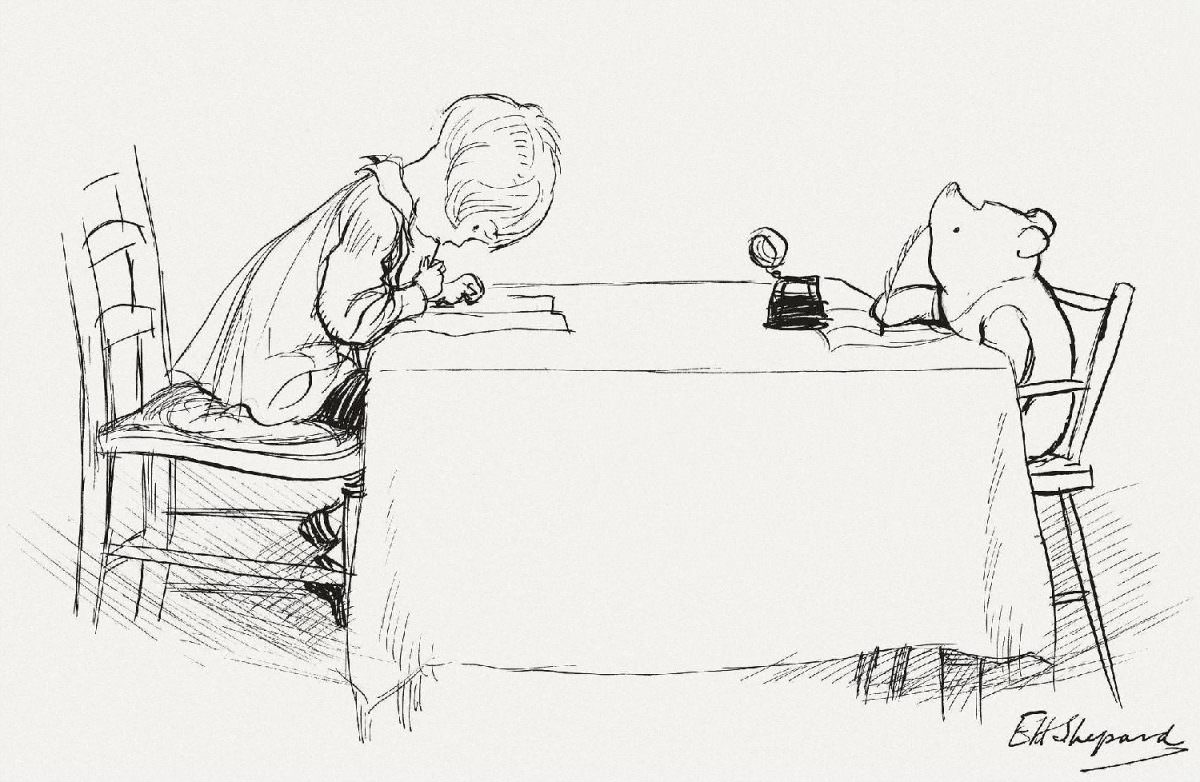
Across a wide, white-draped table, Winnie the Pooh sits in quiet companionship while a child bends over a page, absorbed in the small seriousness of writing. Ernest Howard Shepard’s line work makes the scene feel both intimate and spacious, with the bare background giving every scratch of ink room to breathe. A tiny inkwell and pen become the day’s main props, turning an ordinary tabletop into a stage for imagination.
On the left, the chair’s tall back and the child’s hunched posture suggest a moment of concentration, the kind that belongs to lessons, letters, or secret stories only just being formed. Pooh, seated opposite with simple, rounded features, looks contentedly present rather than performative—an observer and friend more than a character demanding attention. The restrained crosshatching beneath table and chair anchors the drawing, while the generous blank space keeps the mood light, like a pause between sentences.
Within the broader history of Winnie-the-Pooh artworks, illustrations like this help explain why Shepard’s vision endures: he captured childhood not as spectacle, but as a series of tender, everyday rituals. The economy of his pen—confident outlines, selective shading, and expressive posture—invites readers to supply their own warmth and narrative. For anyone searching for classic Winnie the Pooh illustration art, this piece offers a distilled glimpse of the charm that has carried these characters from the page into cultural memory.