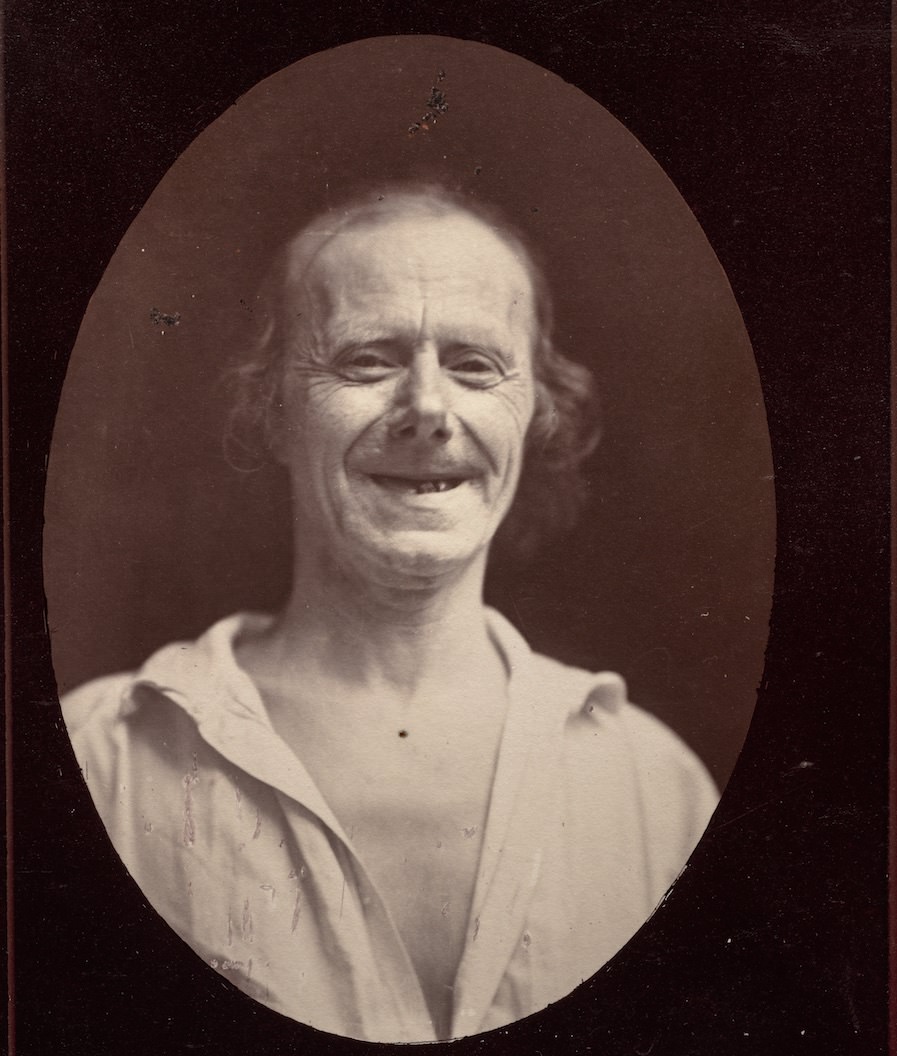
A faint, oval vignette frames a close portrait of a man whose smile seems both inviting and oddly deliberate, as if he has been instructed to hold the expression a fraction longer than comfort allows. Fine wrinkles gather at the corners of his eyes, the mouth opens just enough to show missing teeth, and the soft focus typical of early photographic processes lends the scene a dreamlike hush. Against the dark, empty backdrop, the plain, loosened shirt pulls attention back to the face—Duchenne de Boulogne’s true subject, rendered with an almost clinical intimacy.
Guillaume-Benjamin-Amand Duchenne de Boulogne’s “Mechanism of Human Physiognomy” sits at a crossroads where medical research, visual culture, and the emerging authority of photography meet. The portraits associated with this work were made to study how facial muscles shape recognizable emotions, turning fleeting expressions into specimens that could be examined, compared, and reproduced. What reads today as unsettling or theatrical was, in its own context, a bold attempt to map the body’s language with the tools of science and the persuasive realism of a photograph.
Seen now, these illustrations invite more than curiosity about physiology; they raise questions about observation, performance, and the power dynamic between photographer and subject. The series remains essential for anyone interested in the history of neuroscience, physiognomy, and early medical photography, as well as artists drawn to the expressive possibilities of the human face. This post gathers striking examples from Duchenne’s influential project, highlighting the eerie beauty and enduring impact of its studies of expression.