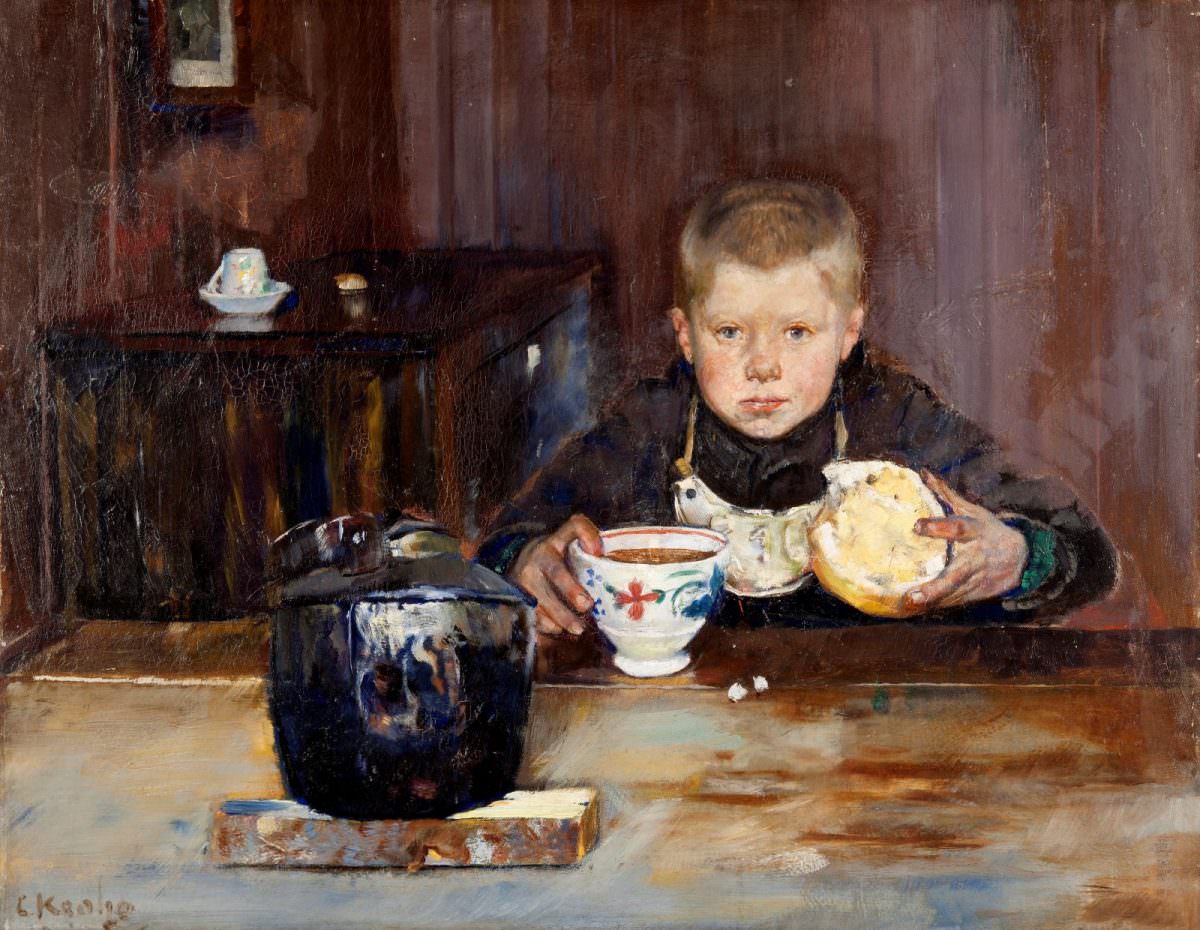
A boy with cropped hair sits squarely at a worn table, meeting the viewer’s gaze as if interrupted mid-break. In front of him, a large patterned cup brims with coffee, while his other hand clutches a hefty piece of bread, the kind of simple fare that keeps a working day moving. The room around him is spare and shadowed—wooden walls, a cupboard, and a small cup set back like an afterthought—pulling attention to the child’s face and the modest meal.
The title, “Errand Boy Drinking Coffee, 1885,” hints at a life measured in deliveries, messages, and quick steps between shops and homes. Coffee here reads less like leisure than necessity, a warm, bitter fuel for someone expected to work before he’s fully grown. The artist’s intimate composition and earthy palette emphasize ordinary objects—cup, loaf, kettle—turning everyday working-class routine into the subject worthy of careful observation.
For readers interested in 19th-century social history, childhood labor, and domestic interiors, this artwork offers a vivid window into how work and home overlapped. Details like the oversized cup, the scuffed tabletop, and the dark kettle in the foreground lend the scene a tactile realism that suits a WordPress post about historical art. Whether approached as genre painting or as a quiet comment on working youth, the image lingers because it feels both specific and universal: a brief pause, a hot drink, and a child already carrying adult expectations.