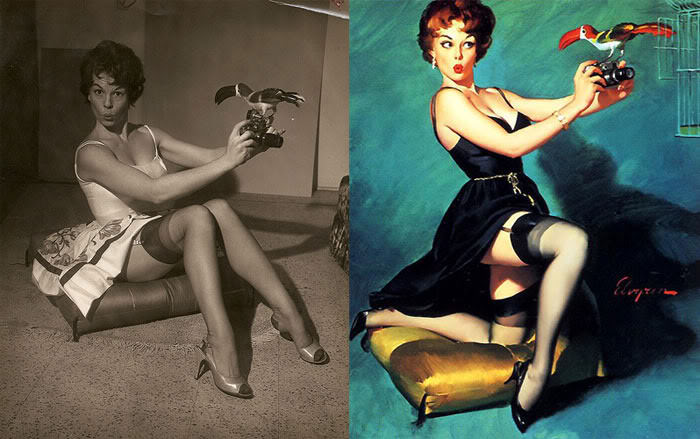
Side by side, the raw studio snapshot and the finished pin-up painting reveal how much “incredibly beautiful” was a crafted effect rather than an accidental miracle. On the left, a model poses on a low cushion with stockings, heels, and a playful prop in hand, the lighting plain and the room quietly present. On the right, that same pose becomes a polished artwork: richer color, smoother contours, and a more theatrical atmosphere that turns a simple setup into a glossy fantasy.
What stands out is the careful editing of mood and body language—details that feel small until you compare them. The painter heightens contrast, refines facial features, and amplifies the curves and sheen of fabric, while also simplifying the background so the viewer’s eye never wanders. Even the prop gains charm and clarity, transforming from a studio accessory into a narrative hook that makes the scene flirtatious and memorable.
For readers interested in pin-up models before and after editing, this comparison offers a behind-the-scenes look at mid-century illustration techniques and the real women who made the genre possible. It’s a reminder that pin-up art was a collaboration between model, camera, and artist, shaped by retouching, idealization, and the visual standards of the era. As a historical photo pairing, it’s also a useful lens for discussing beauty culture, commercial art, and how everyday studio sessions became icons of popular imagery.