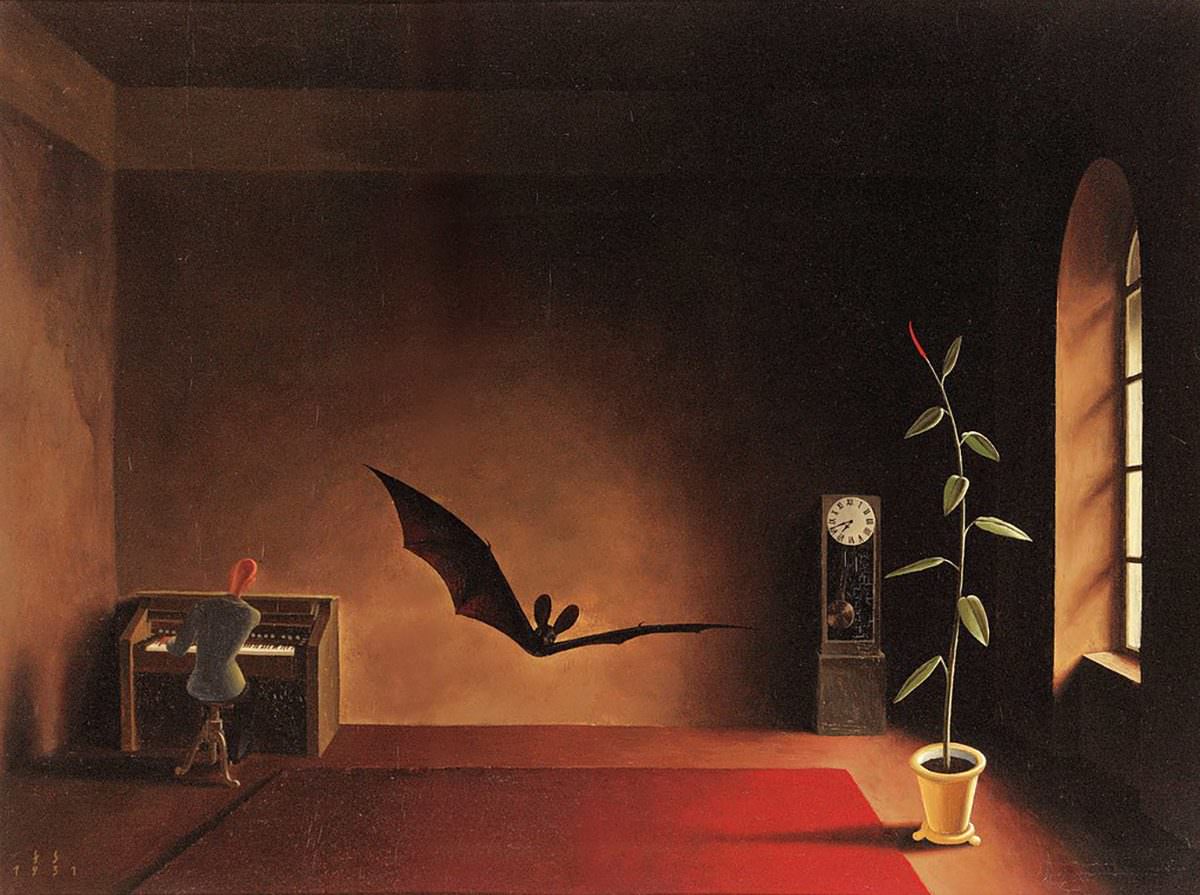
Twilight settles into a quiet room where everyday objects turn theatrical: a small keyboard sits at the left, a lone figure perched before it, while a bat-like silhouette glides across the warm, dusky wall. The palette is restrained yet dramatic—deep browns, muted shadows, and a strong red plane underfoot—giving the scene a staged, dreamlike stillness that fits the title “Song in the Twilight, 1931.”
Across the composition, time and life share the same air. A tall clock stands near the center-right like a sentinel, and beside it a potted plant rises toward the light, its stem punctuated by leaves and a single red bud that echoes the red band on the floor. At the far right, an arched window pours in a narrow column of illumination, sharpening edges and making the surrounding darkness feel deliberate rather than empty.
Seen as a work from 1931, the image reads less like a documentary moment and more like an emblem of mood—music, nightfall, and the uncanny interruption of wings in mid-flight. The careful arrangement of interior space, the contrast of shadow and glow, and the suggestion of sound without hearing it all contribute to a surreal, poetic atmosphere. For readers searching for “Song in the Twilight 1931” or exploring early 20th-century art and symbolism, this piece offers a memorable meditation on solitude, rhythm, and the quiet suspense of evening.