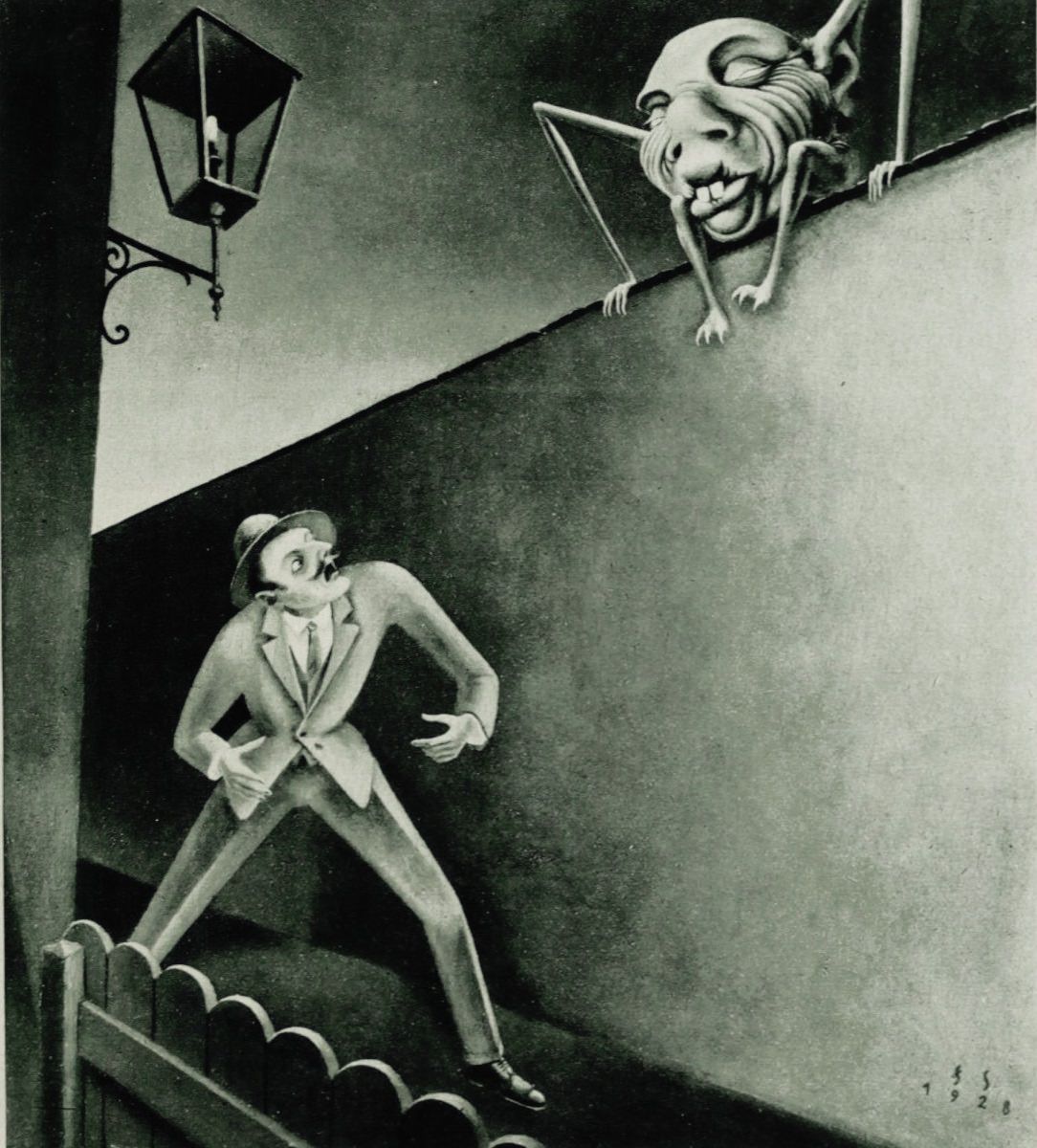
A narrow streetlamp juts from the left like a stage prop, casting a theatrical hush over a steep wall and a small fence in the foreground. Below, a hat-wearing passerby freezes mid-step, shoulders hunched and hands splayed in a startled gesture, his gaze pulled upward as if an unseen cue has just been delivered. The composition feels like a set built for suspense—clean planes of shadow and light guiding the eye to a sudden, unsettling encounter.
Perched on the top edge, the “Kobold” grins with exaggerated features and spidery limbs, leaning forward with the casual confidence of a creature that belongs to the night. Sedlacek’s line and shading heighten the uncanny: the goblin’s expression is playful yet predatory, while the human figure below appears comically vulnerable, stretched into a rigid, puppet-like posture. The tension between humor and menace is immediate, evoking the uneasy laughter of cabaret and the sharp edge of early modernist satire.
Tied to the title “Der Kobold” and the publication context “Die Bühne,” this 1929 artwork reads like an illustration for a performance that happens after dark—part street scene, part psychological vignette. It’s an arresting example for readers interested in Franz Sedlacek, interwar European art, and the visual culture of the theater world, where masks, exaggeration, and mood do the storytelling. The image rewards a slow look, inviting questions about who is watching whom, and how easily ordinary life can tilt into the fantastic.