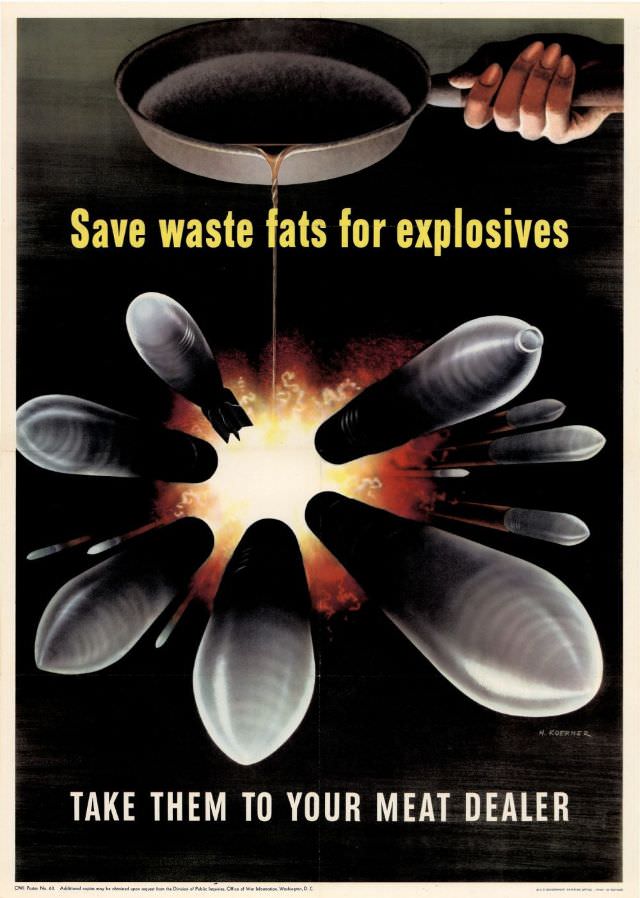
Bold lettering commands attention—“Save waste fats for explosives”—as a skillet tilts and a thin stream of cooking grease falls like a fuse into a burst of light. Around that flare, bomb shapes radiate outward, turning an ordinary kitchen leftover into a visual argument about wartime necessity. The stark contrast and dramatic composition make the message impossible to miss, a classic example of WWII home-front poster art designed to be understood at a glance.
The poster’s power lies in how it links domestic routine to industrial warfare, suggesting that even scraps from frying pans could be transformed into materials for munitions. Rendered with cinematic urgency, the imagery collapses the distance between stove and battlefield, inviting civilians to see their daily habits as part of national defense. It’s a reminder of the era’s rationing culture, where salvage drives and thrift were promoted not merely as virtues, but as contributions to victory.
At the bottom, the directive “TAKE THEM TO YOUR MEAT DEALER” anchors the drama in practical instructions, hinting at the local collection networks that made such campaigns workable. For historians and collectors of World War II propaganda posters, the piece offers a clear snapshot of how governments mobilized communities through compelling graphic design and simple, actionable steps. As a searchable artifact of 1940s civilian mobilization, it speaks to the persuasive language and visual symbolism that shaped everyday life on the home front.