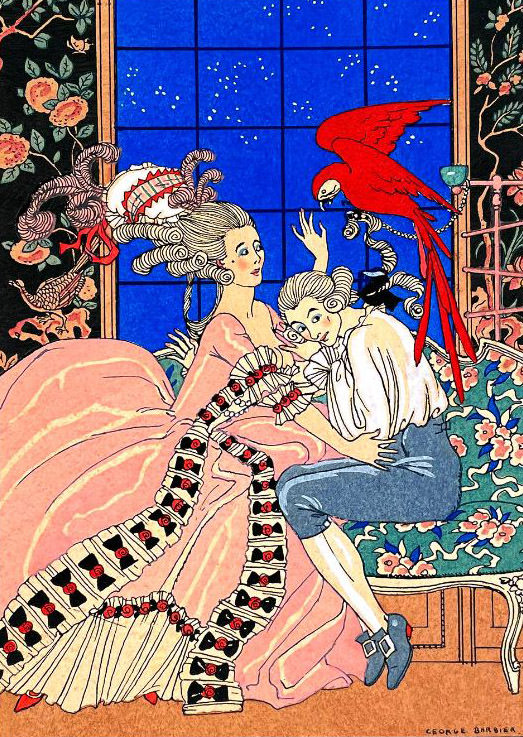
Against a deep, midnight-blue window sprinkled with star-like dots, “Le Perroquet Jaloux, 1919” unfolds as a richly theatrical interior scene, more illustration than straightforward document. A woman in a voluminous pink gown reclines with the calm poise of a stage heroine, her powdered, ribboned hair arranged in elaborate curls that signal a taste for historical fashion and playful artifice. The surrounding décor—floral textiles, patterned panels, and a carefully composed palette of rose, teal, cream, and cobalt—creates an ornamental world where every surface seems designed to be admired.
Beside her, a second figure leans close with an intimate, almost conspiratorial posture, while a brilliant red parrot dominates the upper right, angled toward a raised hand as if interrupting the moment. That vivid bird, visually louder than anything else in the composition, embodies the title’s “jealous” tension: a watchful presence hovering over private affection. The artist heightens the narrative through gesture and gaze—soft expressions below, sharp beak above—turning a quiet room into a small drama of attention, rivalry, and desire.
In 1919, such decorative storytelling resonated with audiences drawn to romantic fantasy and the refined pleasures of interior life, even as modernity accelerated outside the frame. The work’s stylized linework and sumptuous patterning make it a strong example of early 20th-century French illustration aesthetics, bridging costume nostalgia with bold, graphic color. For readers searching art history, vintage illustration, or “Le Perroquet Jaloux” themes, this image offers a memorable blend of elegance and mischief—where a single scarlet parrot can tip the balance of the entire scene.