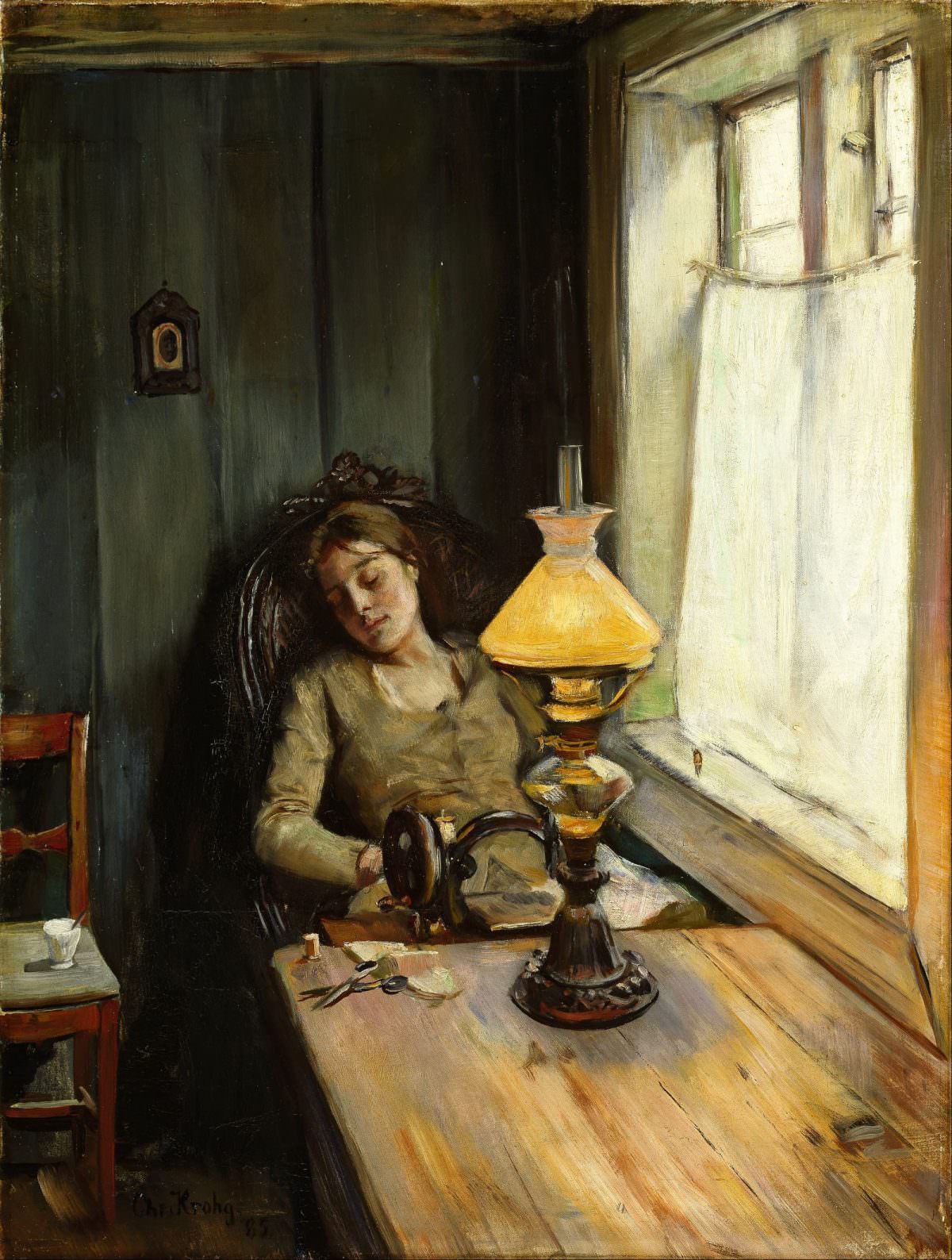
In *Tired, 1885*, weariness is rendered with quiet honesty: a young woman slumps in a wicker chair, head tilted and eyes closed, as if sleep has overtaken her mid-task. The room is spare but intimate, its dark walls pressing in while a pale window curtain diffuses daylight across her face and the worn tabletop. A glass oil lamp stands like a small monument beside her, catching the light and anchoring the scene in domestic reality.
Near her hands sits a sewing machine, its curved metal form and handwheel hinting at long hours of repetitive work, while scattered notions—thread, fabric, and small tools—suggest a project left unfinished. The contrast between the bright window and the shadowed interior amplifies the mood, turning simple household objects into symbols of routine and fatigue. Even the empty cup on the nearby chair reads as a trace of pause, a moment stolen from labor.
As a late-19th-century genre artwork, the painting speaks to everyday life rather than grand events, inviting viewers to linger over the textures of wood, glass, and cloth and the human cost of constant making. The title “Tired” does more than describe a pose; it frames the scene as a story of endurance within the home, where industry and rest collide. For readers searching for 1880s art, historical domestic interiors, or depictions of women’s work, this piece offers an evocative window into the quieter side of the past.