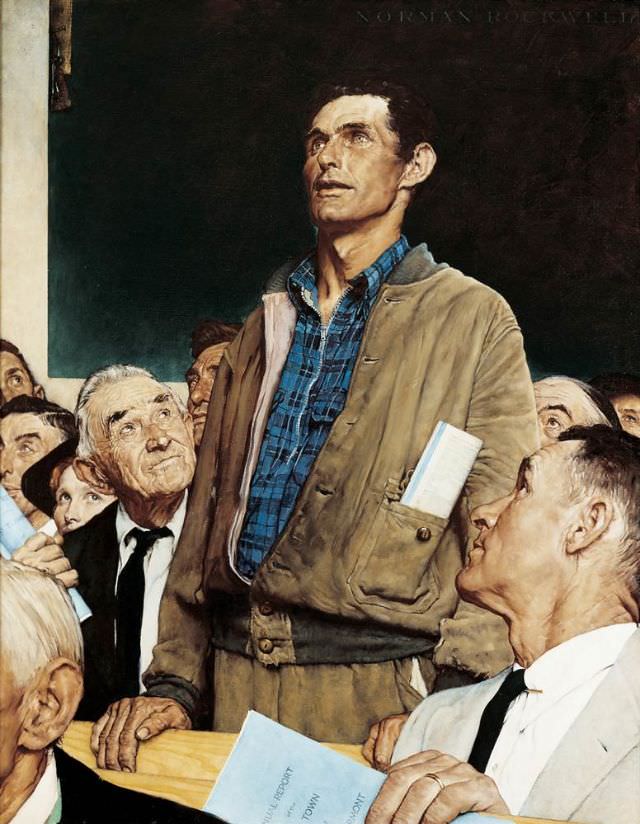
Norman Rockwell’s “Freedom of Speech,” published in February 1943 as part of The Four Freedoms series, brings the lofty language of democratic rights down to a familiar, small-room setting. At the center stands a working-class man in a worn jacket and plaid shirt, rising to speak with quiet resolve while those seated around him turn their faces upward. The composition draws the eye to his steady posture and thoughtful expression, making the act of speaking feel both ordinary and courageous.
Around him, Rockwell stages a cross-section of community life: older men in suits, attentive neighbors, and faces half-seen at the edges, all packed close as if in a town meeting or local hearing. The seated figures clutch papers that resemble agendas or pamphlets, hinting at civic procedure and shared responsibility rather than grand ceremony. Light and shadow do much of the storytelling, isolating the speaker against a darker backdrop so the room’s collective attention becomes visible.
Viewed today, this artwork remains one of Rockwell’s most enduring illustrations of American ideals, not because it shows a hero, but because it insists that freedom of speech lives in everyday participation. The painting’s realism—creased clothing, weathered hands, and intent gazes—turns a principle into a lived moment, linking wartime messaging with timeless questions about voice and belonging. For readers searching for The Four Freedoms, Norman Rockwell, or “Freedom of Speech” (1943), this piece offers a vivid reminder that democracy depends on both the courage to speak and the willingness to listen.