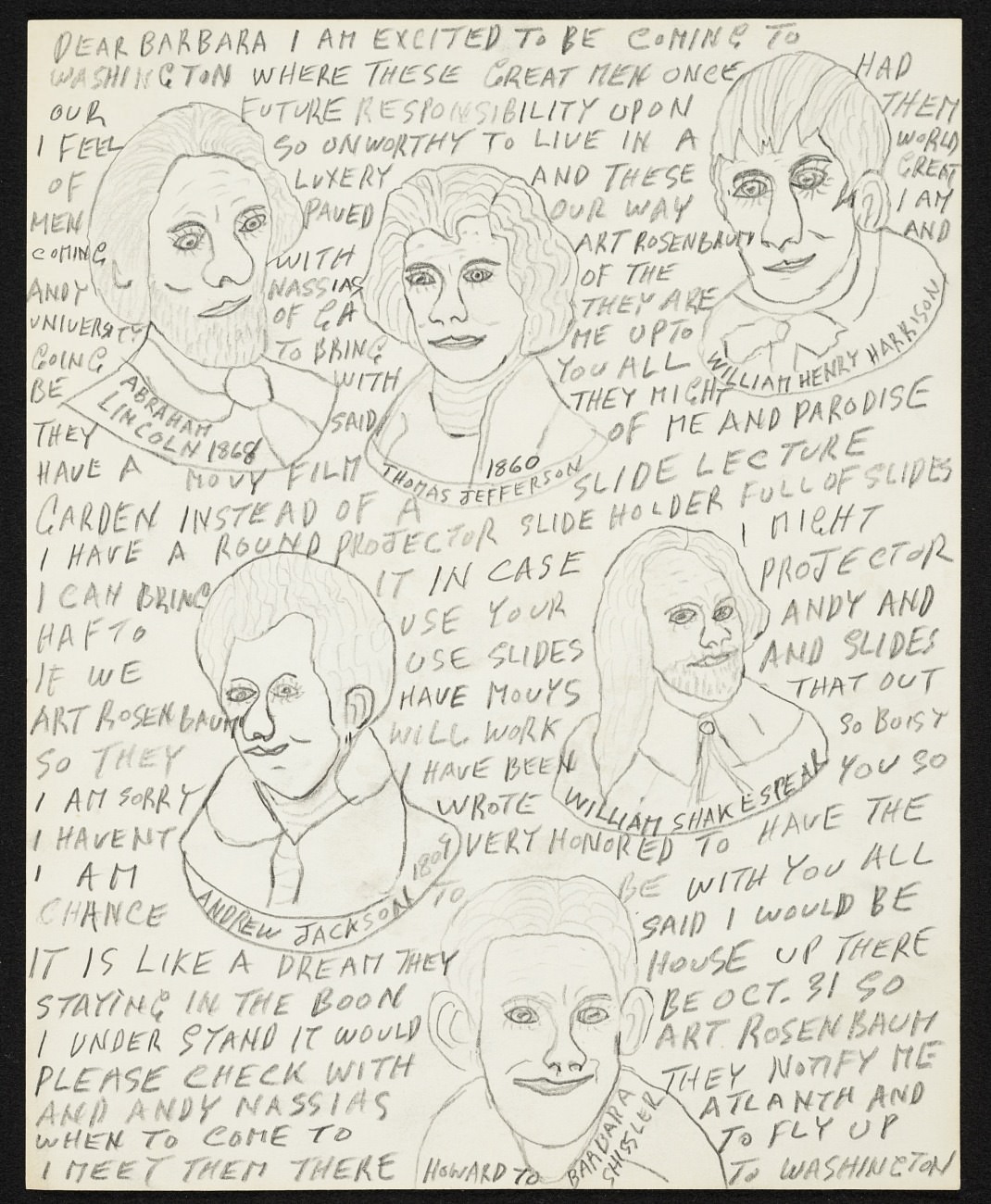
Handwritten energy fills the page in “Howard Finster to Barbara Shissler Nosanow, 1981,” where a dense letter becomes an artwork in its own right. Lines of text crowd the background, giving the impression of a hurried, excited message, while the pencil marks retain the immediacy of a note meant to be read—not merely admired. That combination of personal correspondence and visual composition makes the piece feel intimate, like standing close enough to hear the author’s voice.
Scattered across the sheet are several portrait heads drawn in a simple, direct style, each labeled with a well-known historical name; among those legible are Abraham Lincoln, Thomas Jefferson, William Henry Harrison, Andrew Jackson, and William Shakespeare. The figures float amid sentences that mention travel plans, Washington, and a “slide lecture,” weaving logistics and aspiration into the same space as icons of history. Rather than separating illustration from writing, Finster lets the letter and the drawings jostle together, turning the page into a crowded stage of ideas.
Barbara Shissler Nosanow, addressed at the top, becomes the recipient of both message and mythmaking, as everyday arrangements sit beside references to great men and public memory. For readers interested in outsider art, folk art, and artist letters, this 1981 document offers a vivid example of how correspondence can double as a finished visual statement. It’s a reminder that archives aren’t only about facts and dates—they also preserve the texture of enthusiasm, belief, and the lived moment behind the art.