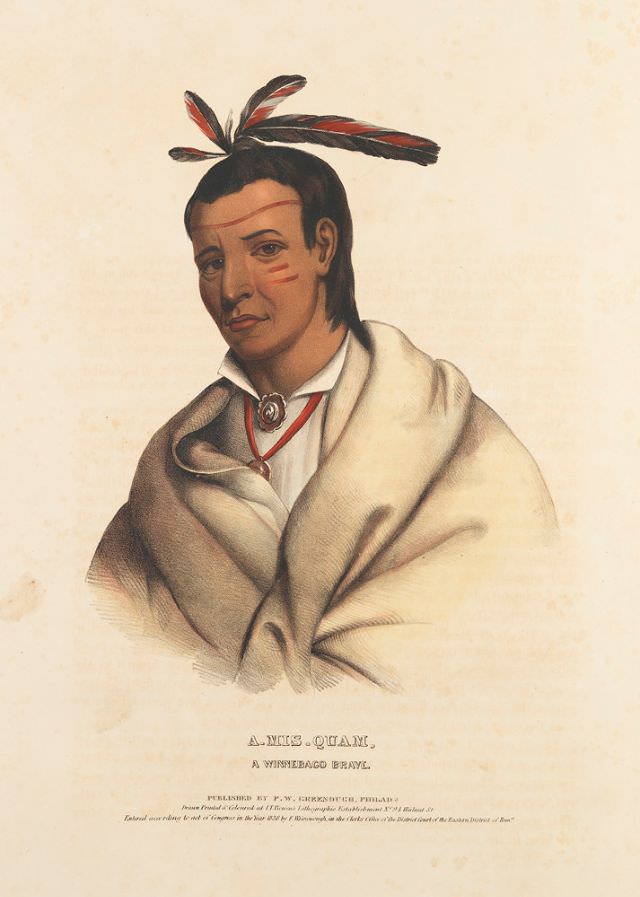
A‑Mis‑Quam is presented in a composed, formal portrait that reads like a carefully prepared plate from an early American art publication. The Winnebago brave faces the viewer with a steady gaze, his hair gathered with a small feathered arrangement that adds movement and color above his brow. Subtle face paint marks and a blanket-like wrap around the shoulders give the figure both individuality and dignity, balancing ceremonial detail with the quiet stillness of a studio-style likeness.
The artist’s attention lingers on texture and restraint: the soft folds of the draped garment, the crisp collar beneath, and a simple necklace at the throat that draws the eye to the center of the composition. Set against an uncluttered background, the portrait invites viewers to focus on expression rather than scenery, making it as much a study of presence as it is a record of attire. For readers searching for “A‑Mis‑Quam, A Winnebago Brave” or “Winnebago portrait artwork,” the image offers an evocative glimpse into how Indigenous sitters were rendered in historical prints.
Seen today, this artwork also raises questions about the circumstances under which such portraits were made and circulated—who commissioned them, how they were viewed, and what they leave unsaid. The printed caption below the figure underscores its purpose as a labeled, collectible image, intended to travel far beyond the subject’s own community. As a WordPress feature, it works well as a starting point for discussing Native American portraiture, representation in 19th‑century visual culture, and the enduring human story carried in a single, direct look.