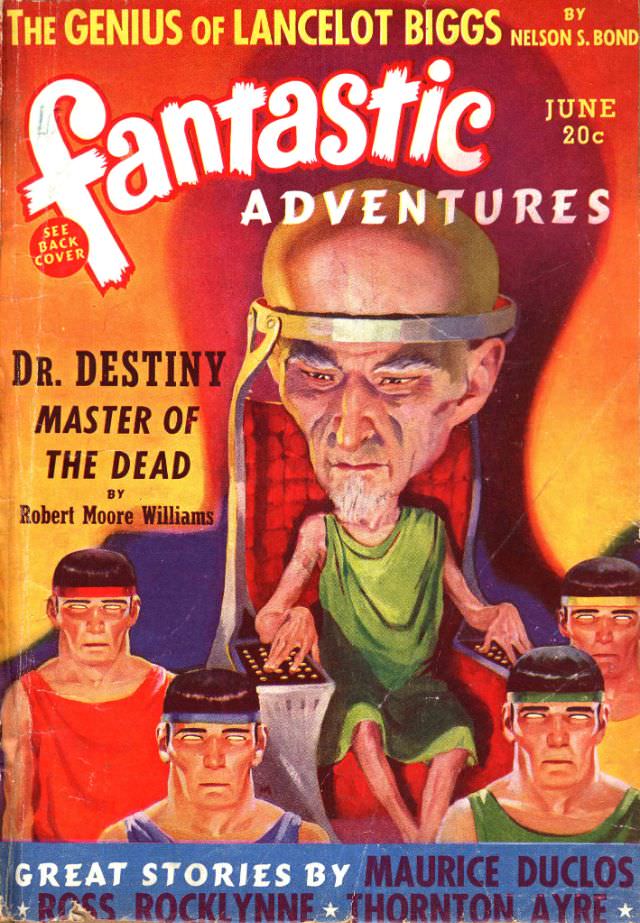
Bold pulp lettering and hot, saturated color pull you straight into the June 1940 cover of *Fantastic Adventures*, where spectacle is the sales pitch and mystery is the hook. The dominant figure—stern, bald, and enthroned—locks the viewer in place with a cold stare, framed by a dramatic, high-backed chair that feels equal parts laboratory and tribunal. Around him, identical, helmeted men with blank expressions stand like a manufactured chorus, amplifying the unease and hinting at control, duplication, or mindless obedience.
Text and illustration work as one tight piece of marketing: “Dr. Destiny—Master of the Dead” promises occult science and peril, while the issue’s other highlighted story, “The Genius of Lancelot Biggs” by Nelson S. Bond, signals the magazine’s blend of mad invention and adventurous humor. The cover typography is classic early science fiction pulp—oversized, angled, and urgent—designed to shout from a newsstand and compete for a reader’s dime-and-a-day attention. Even the small details, like the “See Back Cover” badge and the prominently printed price, reinforce that this was a commercial object built for quick impact.
As a historical artifact, this *Fantastic Adventures* cover offers a vivid snapshot of how American science fiction and fantasy were packaged on the eve of the 1940s, when tales of masterminds, experiments, and uncanny transformations dominated popular imagination. The artwork leans into themes of authoritarian power and the uncanny human copy, motifs that would echo through later genre fiction and film. For collectors and readers, it remains a striking example of pulp magazine cover art—part poster, part promise, and entirely engineered to make you turn the page.