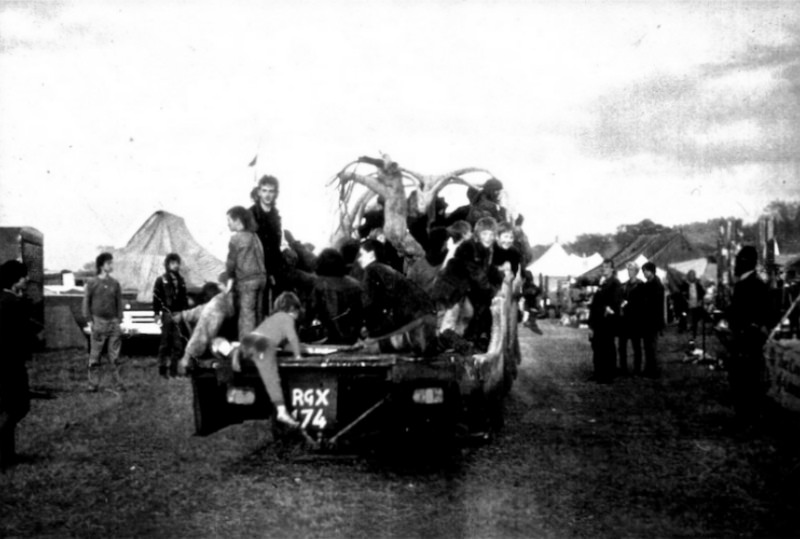
Chaotic and theatrical, the scene unfolds on an open field where a modified scrap-car “float” draws a small crowd, with people perched on the vehicle and others gathered along a makeshift route. Twisted metal rises like a spiky crown from the car’s bodywork, suggesting the Mutoid Waste Company’s knack for turning wreckage into spectacle. In the background, temporary tents and clustered onlookers hint at a festival or outdoor art gathering rather than a conventional gallery setting.
Up close, the work reads as equal parts sculpture and provocation: a battered chassis repurposed into an art object that invites participation, not quiet contemplation. The rough welds, jagged silhouettes, and improvised additions give it a creature-like presence, as if automotive debris has been reanimated into something celebratory and unsettling at once. That DIY intensity—public, noisy, and collaborative—sits squarely within the 1980s underground art spirit that prized reuse, shock, and invention.
For anyone searching the history of Mutoid Waste Company scrap car artworks, this photograph offers a grounded glimpse of how these bizarre creations functioned in real space, among real crowds. It speaks to a moment when industrial leftovers became raw material for performance, parade, and anti-consumer commentary, long before “upcycled art” became a familiar phrase. The result is a memorable slice of 1980s art culture, where discarded machines were reborn as rolling monuments to imagination and rebellion.