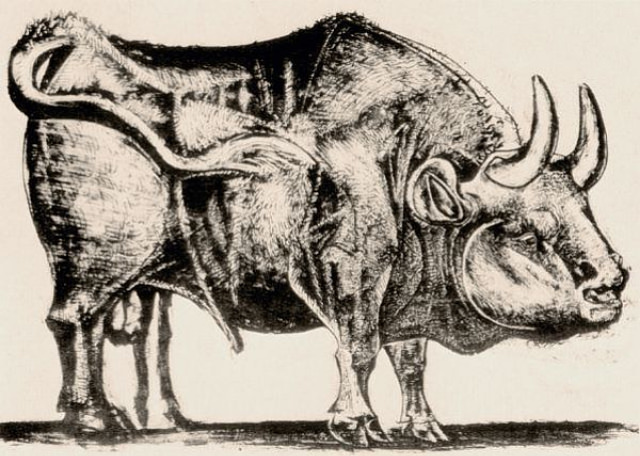
Plate 3 turns the viewer sharply toward the animal itself, presenting a powerful bovine figure rendered with bold, dark strokes and a deliberate sense of weight. The horned head, lowered slightly, anchors the composition while the broad flank and thick legs carry the eye across the frame. Even without color, the artist finds drama in contrast—inky shadows and pale highlights shaping muscle, hide, and bone.
Attention lingers on the textures: the ribbed contours along the torso, the roughened sheen of the shoulder, and the pooled darkness beneath the hooves that pins the creature to the ground. The linework feels urgent and worked over, as if the drawing was revised in the moment to push volume and depth. That “change of direction” hinted at in the title can be felt in the shift from outline to mass, from simple depiction to a more structural study of form.
As an artwork for a WordPress post, this plate reads like a small lesson in observation—how an illustrator can suggest strength, temperament, and physical presence with nothing more than charcoal-like marks. It also fits neatly into searches for historical animal illustration, classic print plates, and early drawing studies of livestock. Whether approached as a standalone image or part of a larger sequence, Plate 3 invites a closer look at how artists used stark values and confident draftsmanship to make living bodies feel real on paper.