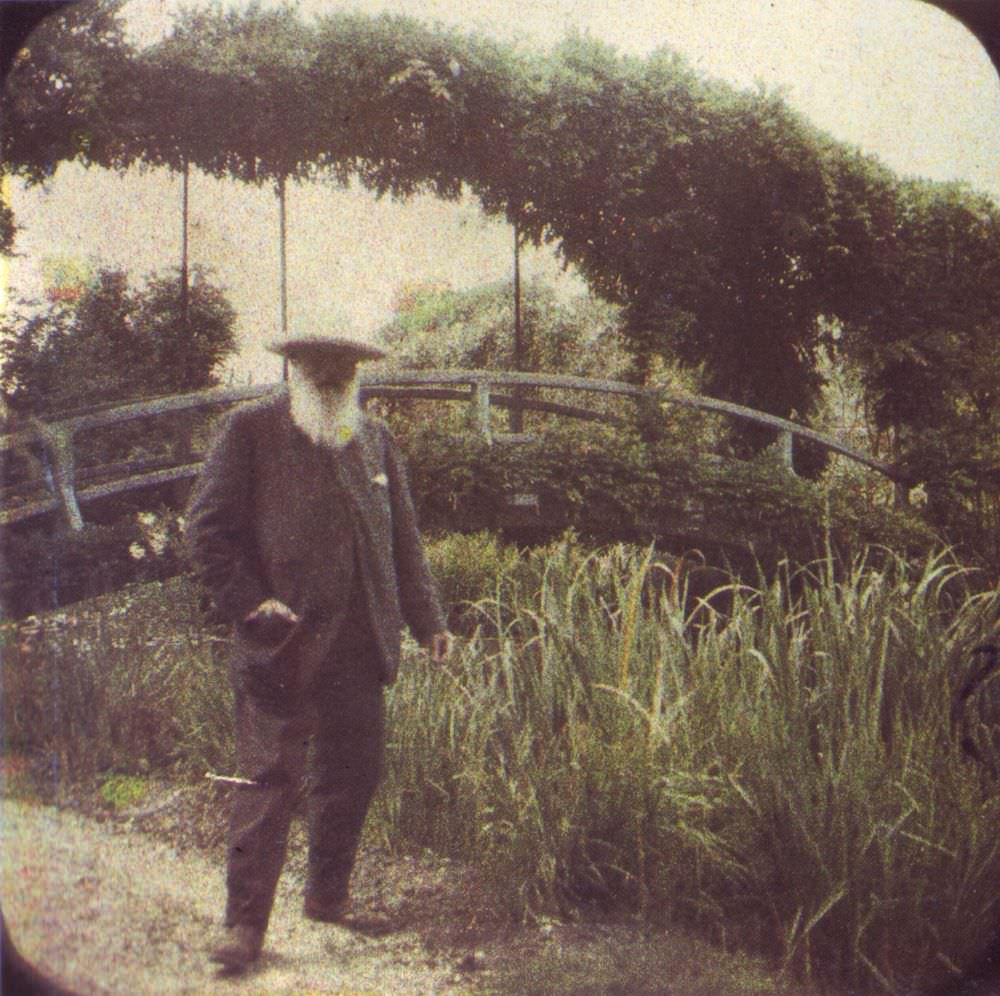
Under a leafy archway, an elderly bearded figure in a dark coat and cap moves along a garden path, half-softened by the haze of an early color photograph. Behind him, a curved wooden bridge spans a small waterway, framed by dense plantings and tall grasses that press toward the lens. The scene feels less like a formal portrait than a quiet moment inside a working landscape—nature shaped with an artist’s patience.
Giverny has long been linked with Claude Monet’s most celebrated motifs, and this view evokes the very environment that fed his imagination: a cultivated pond, a bridge, and foliage trained into living architecture. The bridge’s arc and the surrounding greenery suggest the kind of carefully arranged “natural” space that Impressionist painting made luminous—an outdoor studio where light, reflections, and seasonal change could be studied day after day. Even without crisp detail, the photograph’s soft tones echo the atmospheric effects Monet pursued on canvas.
For readers searching for Claude Monet Giverny gardens, studio life, and the visual roots of the water garden artworks, this image offers an inviting doorway into that personal eden. It hints at the rhythm of walking, observing, and revisiting the same views until they become a series—bridge, pond, plants, and shifting light turned into art. Paired with the post’s focus on the studio and gardens of Giverny, the photograph helps ground the legend in a tangible, lived-in place.