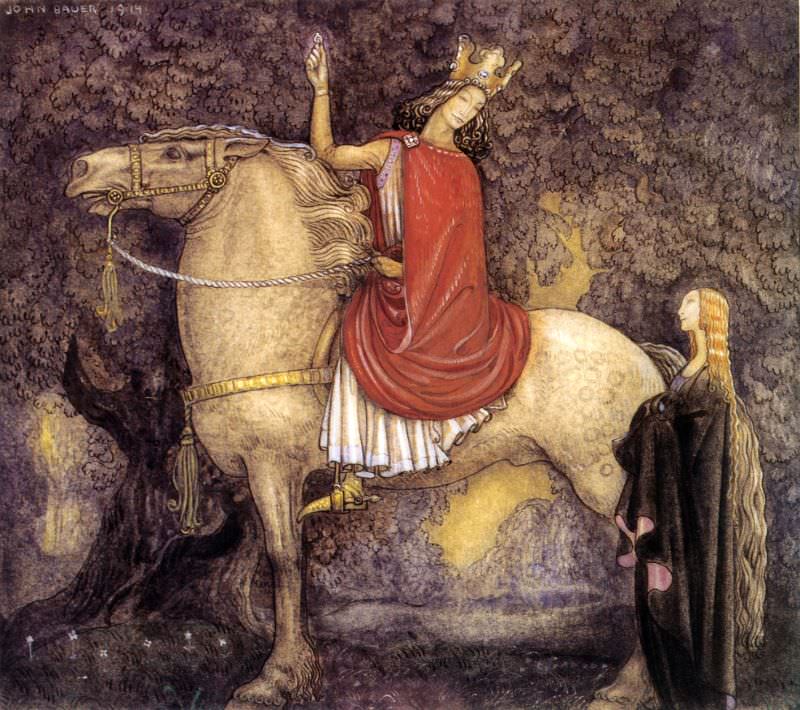
Beneath a dense canopy of stylized trees, a crowned rider sits side-saddle on a pale horse, one hand raised in a poised, almost ceremonial gesture. Draped in a flowing red cloak over a light gown, the figure’s calm expression contrasts with the animal’s powerful, grounded stance and ornate tack. The scene feels less like a fleeting moment and more like a carefully staged legend, built from decorative detail and deliberate symmetry.
Painted in 1914 and titled “The Ring,” the artwork leans into medieval romance and fairy-tale symbolism without spelling out its narrative outright. A second figure—standing near the horse’s flank with long, golden hair and a dark mantle—turns the encounter into a quiet drama of courtly attention, part greeting and part farewell. Subtle patterns in the foliage and the horse’s coat, along with the limited, rich palette, create a dreamlike atmosphere that invites close looking.
For readers searching for early 20th-century art, mythic illustration, or romantic medieval imagery, this piece offers a vivid window into a period that often revisited older stories in modern ways. The careful rendering of costume, crown, and harness suggests an interest in historical textures even as the background dissolves into an ornamental tapestry. Whether approached as fantasy, allegory, or simply a striking decorative composition, “The Ring” rewards anyone drawn to symbolism, storytelling, and the enduring appeal of chivalric themes.