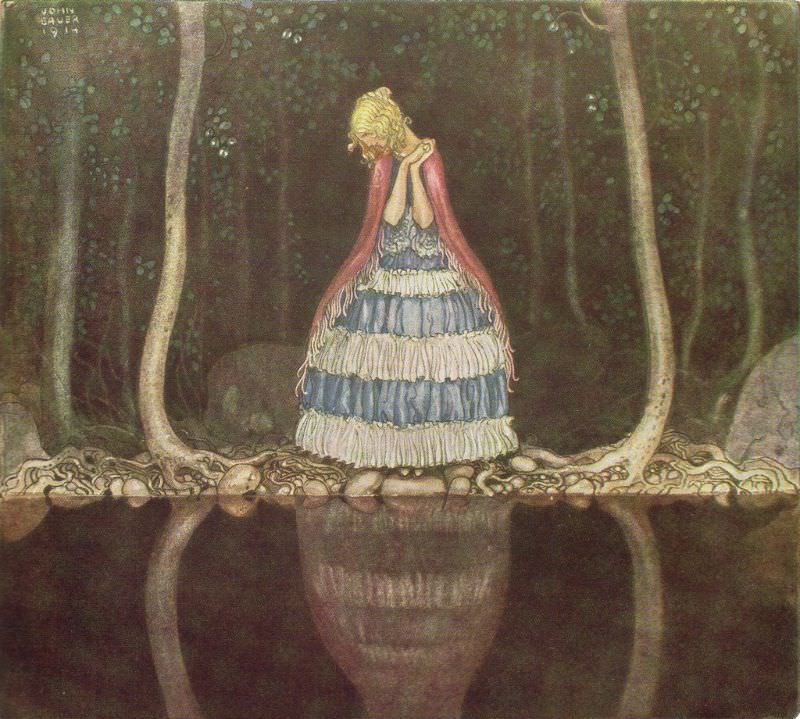
Between pale tree trunks and a carpet of forest stones, a lone figure in a lavish, tiered dress pauses at the water’s edge, her head bowed as if listening to the hush of the woods. The scene feels like a fairy tale caught mid-breath—dark foliage behind her, still water below, and a soft reflection doubling the quiet drama. In “When Mother Troll Took in the King’s Washing, 1914,” the title invites you to read the image as folklore: royal finery brought down to earth, and the uncanny domestic world of trolls brushing up against courtly life.
Delicate color and careful linework give the artwork a dreamlike clarity, with the figure’s pale hair and ruffled skirt standing out against the shadowed greens and browns. The composition draws the eye from the slender trunks to the stony bank, then down into the mirror of the pond, where the reflection suggests a second, submerged story. That interplay—surface and depth, innocence and menace—matches the old Northern storytelling tradition in which wilderness is never merely background, but a character with motives of its own.
As a historical artwork from 1914, the piece also speaks to a broader early-20th-century fascination with myth, costume, and the symbolic power of the natural world. The “king’s washing” hints at a playful reversal of status, where laundry and lace become plot points and the boundary between human society and troll-country blurs. Ideal for readers searching for vintage illustration, Scandinavian folklore art, or fairy-tale imagery, this post offers a lingering look at how artists used enchantment and everyday objects to conjure entire kingdoms.