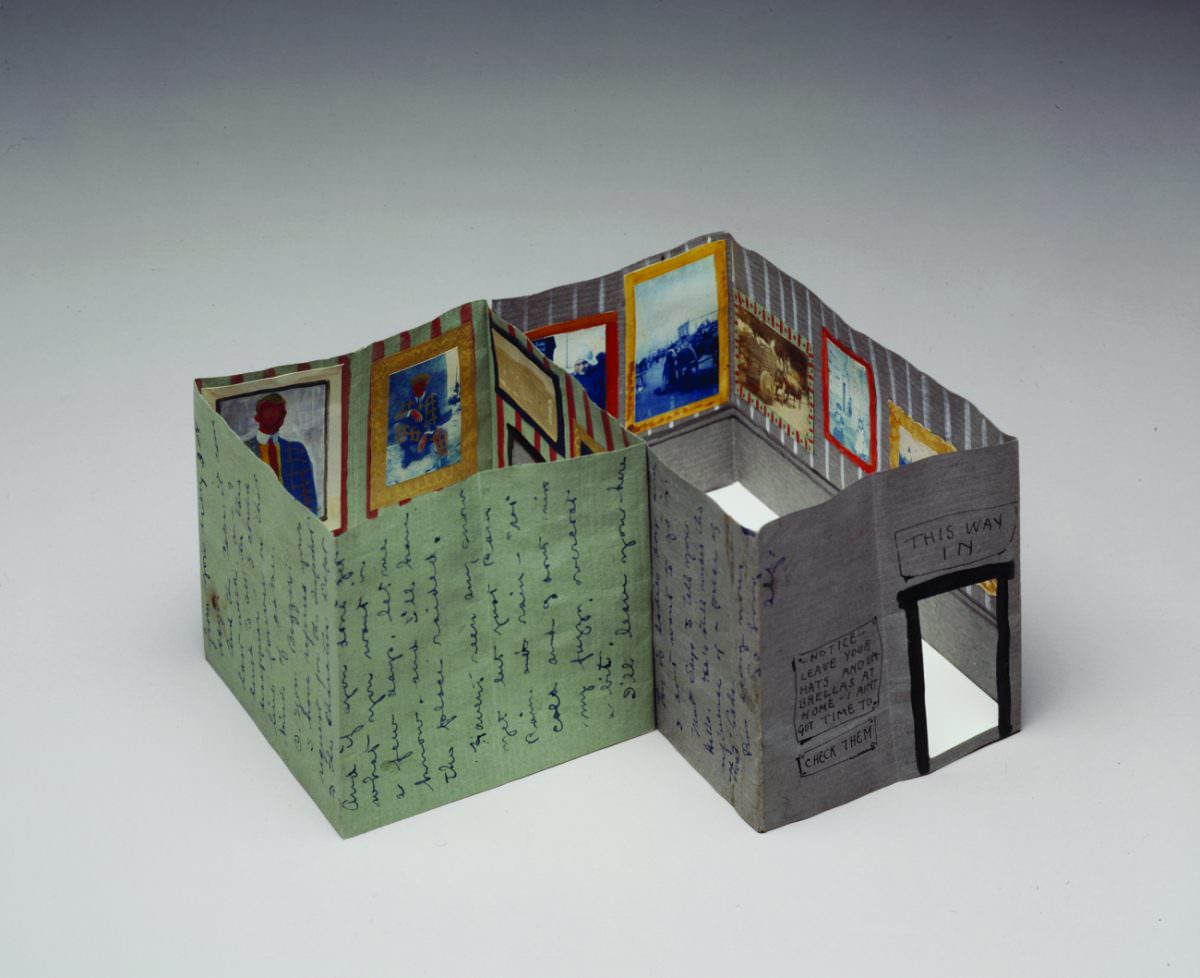
Folded like a small stage set, Alfred Joseph Frueh’s 1913 letter to Giuliette Fanciulli turns private correspondence into an artwork you can almost walk through. The paper opens into a miniature architectural scene, its panels covered with flowing handwriting and bordered by bright, framed vignettes that resemble tiny paintings or postcards. A doorway labeled “THIS WAY IN” invites the eye inward, suggesting that reading is meant to feel like entering a place rather than simply scanning a page.
Color, structure, and script work together to create a playful rhythm: striped walls, painted “frames,” and blocks of text alternate as the folds progress. Along the top, small pictorial scenes—some landscape-like, others more figurative—punctuate the unfolding narrative, while the dense cursive lines emphasize intimacy and immediacy. Even without deciphering every word, the object communicates mood and personality through its craft, balancing whimsy with careful design.
In an era when letters carried the weight of distance, this piece demonstrates how early twentieth-century ephemera could be both message and performance. The combination of handwritten text, illustration, and pop-up construction makes it a standout example for readers interested in historical letters, artist-made mail, and the material culture of communication. As a WordPress post feature, it offers rich visual storytelling and strong SEO appeal for topics like Alfred Joseph Frueh, Giuliette Fanciulli, 1913 correspondence, and inventive paper art.