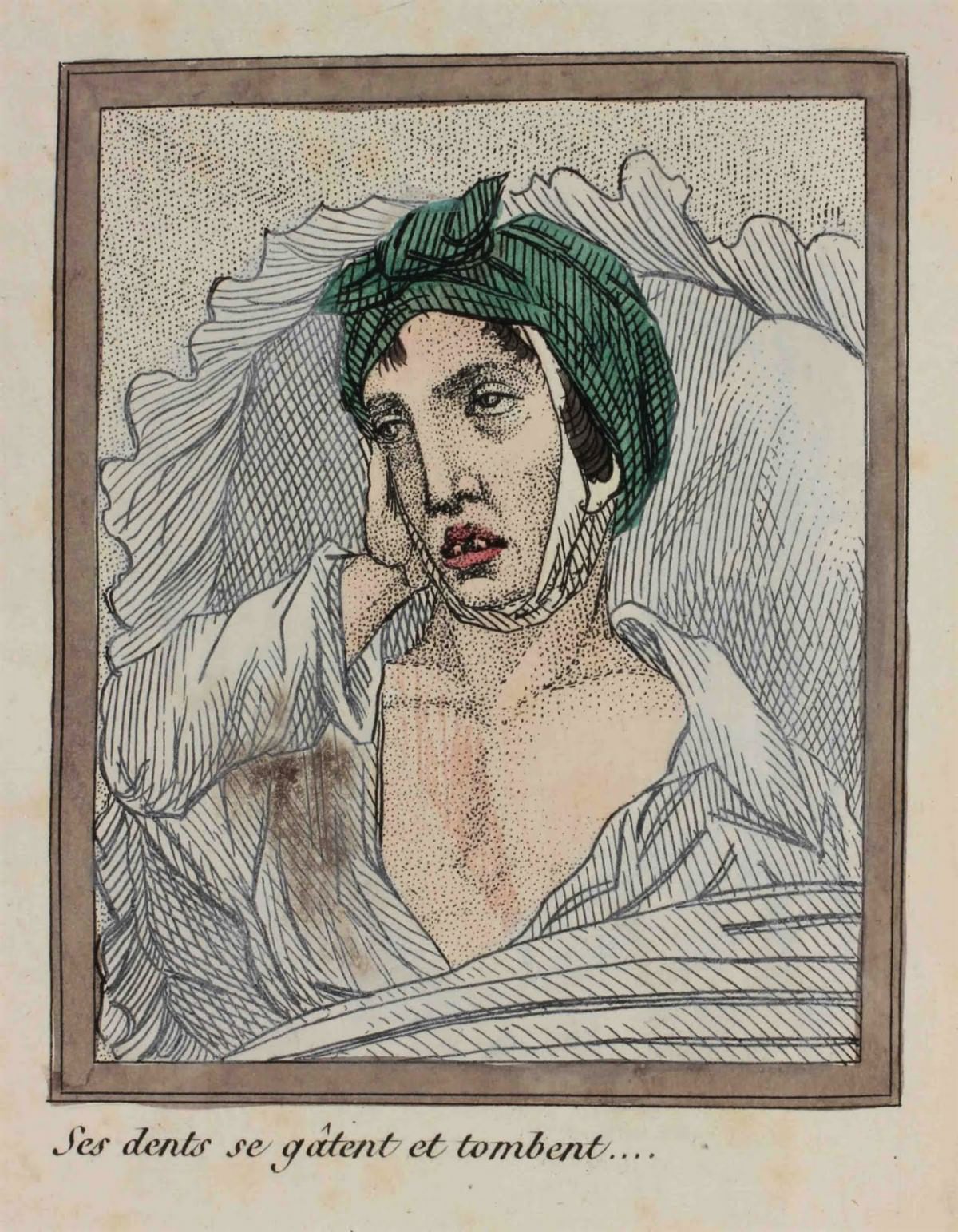
A weary figure reclines against a pillow, head propped on one hand, as if the effort of simply being awake has become too much. The artist’s linework—dense crosshatching and stippled shading—turns the bed linens into a restless field around the face, while a green head wrap and white cloth frame the subject like makeshift bandages. Most arresting is the mouth: lips parted to reveal darkened, broken teeth, a small detail that carries the whole scene from ordinary illness into something more ominous.
Beneath the illustration, the French caption reads “Ses dents se gâtent et tombent…,” a blunt statement that translates to teeth rotting and falling out. That plain phrasing fits the unsentimental tone of medical history, when dental disease and infection were daily realities, and pain was often endured rather than cured. As an artwork, it sits at the intersection of documentary intent and moral warning, using the intimacy of the sickbed to make bodily decline impossible to ignore.
Few themes are as universal—or as quietly terrifying—as the slow unraveling of health, and this print leans into that unease with deliberate simplicity. For readers interested in historical illustration, early health anxieties, and the visual language of suffering, the piece offers a stark window into how tooth decay and oral disease were imagined and communicated to the public. The title’s grim progression, echoed by the caption, turns a single expression into a story of hardship that lingers long after you look away.