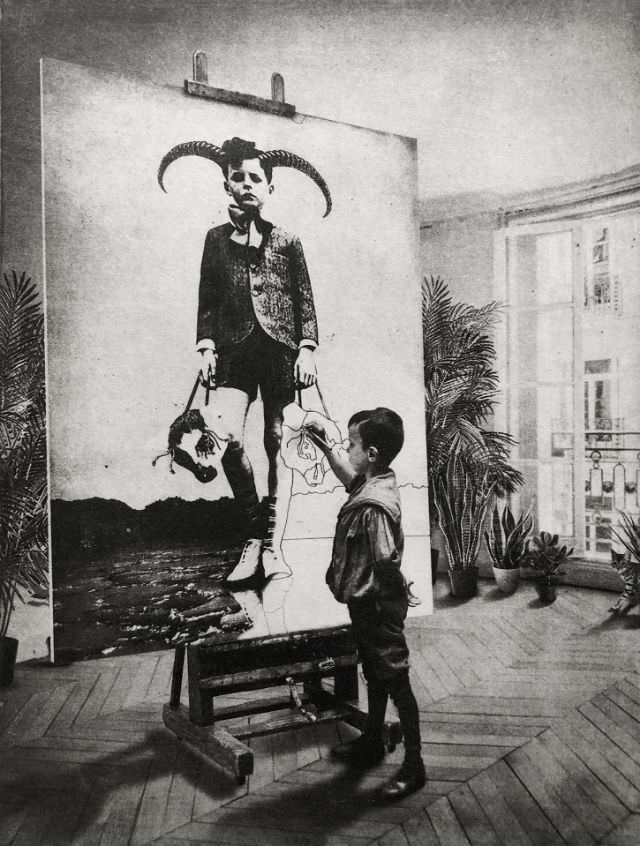
At the center of “Interior No.135: The Plagiarist” stands a tall studio canvas, where a sharply dressed figure is made uncanny by a horned headpiece and dangling, mask-like forms held in each hand. In front of it, a child in short trousers reaches up with a brush, poised between imitation and invention, as if caught mid-lesson on how images are built. The odd theatricality of the painted subject—part portrait, part costume, part provocation—sets the tone for a scene that feels both domestic and unsettling.
Behind the easel, daylight pours through a large window, outlining potted palms and a tidy parquet floor that anchor the composition in a real, lived interior. The studio furnishings are sparse, yet the atmosphere is rich: the scale of the canvas dwarfs the painter, and the room’s calm geometry contrasts with the picture’s darker, dreamlike symbolism. Details like the plant pots, the easel’s sturdy frame, and the crisp windowpanes lend authenticity to what might otherwise read as pure fantasy.
The title’s charge—“The Plagiarist”—invites a second look at the act of copying itself, especially with a young hand literally tracing the contours of someone else’s vision. Is the child learning the craft in the traditional way, or being set up as a stand-in for an older debate about originality, authorship, and artistic theft? For readers interested in historical art interiors, studio photography, and the staged drama of early visual culture, this image offers a memorable meditation on how artworks are made, repeated, and reimagined.