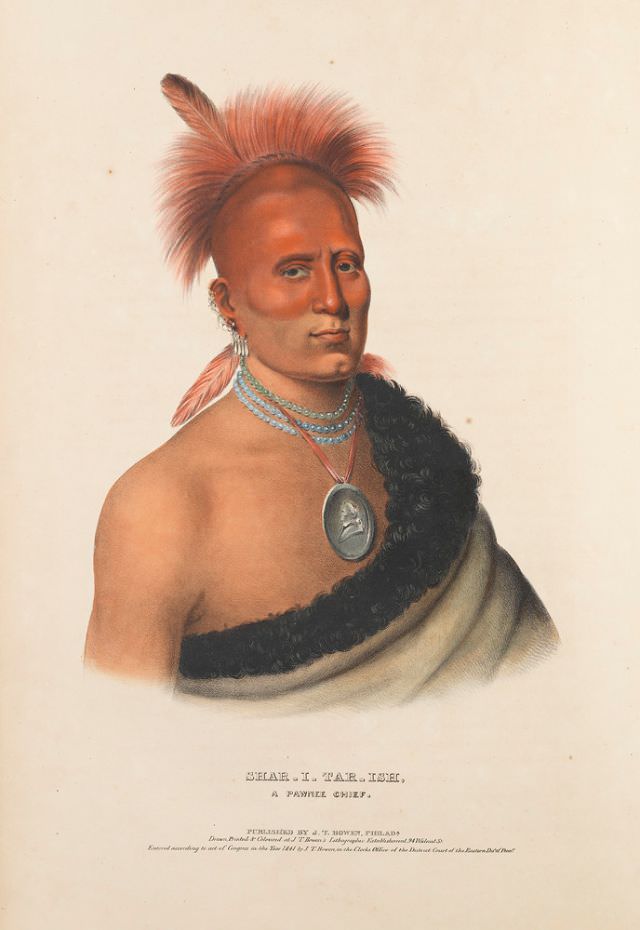
Shar-I-Tar-Ish meets the viewer with a steady, composed gaze in a finely rendered portrait that reads as both artwork and historical document. The sitter’s distinctive hairstyle rises in a fan of reddish plumage, echoed by feather ornaments at the ear, while layered beadwork and a prominent medallion draw attention to the chest. A fur-edged robe slips across one shoulder, its soft texture carefully contrasted against the smooth, uncluttered background that keeps the focus on presence and status.
Portraits like this helped shape how nineteenth-century audiences imagined Native leadership, and they also preserve details that written records often neglect. Here, the careful emphasis on adornment—necklaces, earrings, and the dramatic hair and feathers—signals identity and dignity as much as personal style. The title identifies Shar-I-Tar-Ish as a Pawnee chief, inviting readers to consider the Pawnee people’s political and cultural life beyond the stereotypes so common in older publications.
As a WordPress feature, this image works beautifully for readers interested in Indigenous history, Pawnee heritage, and classic North American portrait art. The printed caption beneath the figure underscores its origin in a tradition of published plates and collections, where images circulated widely as “authentic” representations. Spend a moment with the expression and the craftsmanship: even without a specific date or place named on the page, the portrait offers a vivid entry point into the era’s visual storytelling and the enduring power of Native self-presentation.