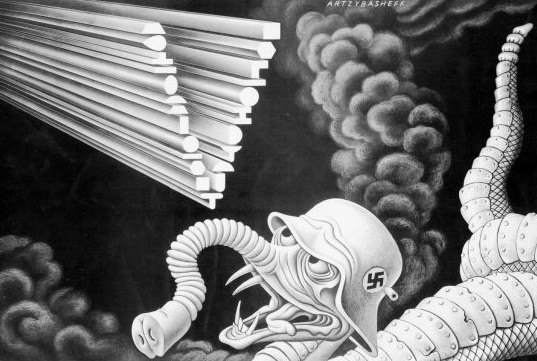
Boris Artzybasheff’s wartime imagination comes through with brutal clarity in this anti-Nazi illustration, where the enemy is rendered not as a heroic soldier but as a grotesque, mechanized creature. A helmet marked with a swastika crowns a snarling, distorted face, while hose-like limbs and segmented, armored forms twist across the frame like industrial tentacles. Overhead, rigid beams or projectiles angle downward in a stark geometric cluster, sharpening the sense of imminent impact and relentless pressure.
Smoke billows in thick, rolling clouds, turning the background into a choking stage that feels both battlefield and factory floor. The artist’s signature blend of surrealism and propaganda design turns hardware into anatomy—metal becomes muscle, and war becomes a monstrous organism. Instead of relying on realism, Artzybasheff uses caricature and symbolic machinery to communicate menace, dehumanization, and the corrosive logic of total war.
For readers exploring WWII artworks, political cartoons, and anti-fascist visual culture, this piece offers a striking example of how illustration functioned as a weapon of persuasion. The composition is dramatic and easy to read at a glance, yet dense with metaphor, making it ideal for a closer look at Artzybasheff’s creative strategies against Nazi ideology. Seen today, it remains an unforgettable reminder of how artists translated fear, outrage, and resistance into unforgettable imagery.