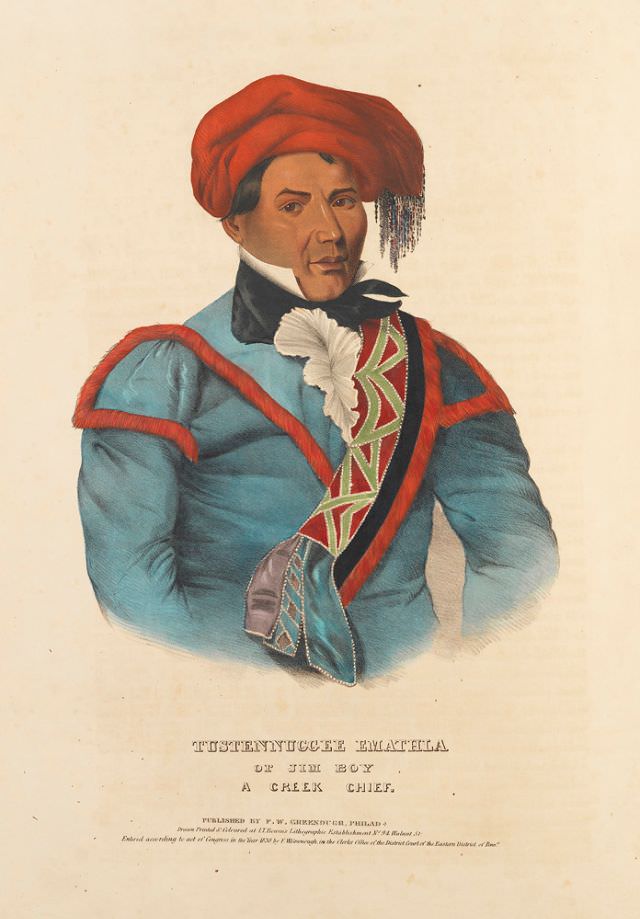
Rendered in rich color with careful attention to dress and bearing, this portrait identifies its subject as Tustennuggee Emathla—also called Jim Boy—a Creek chief. The sitter meets the viewer with a composed, direct gaze, framed by a striking red headwrap and a high white collar that heightens the sense of formality. A patterned sash crosses the chest, while the blue coat’s bold red trim and the soft shading of the face reflect the artist’s intent to present both individuality and status.
Details of clothing and ornament carry much of the story here, making the image valuable for readers interested in Creek history and Native American portraiture. The combination of Indigenous styling with tailored garments suggests a moment when visual representation often balanced cultural identity, diplomacy, and the expectations of Euro-American print culture. Even without a specific date or place provided on the page, the overall composition and captioned presentation point to a work made for circulation—meant to be seen, discussed, and collected.
For a WordPress post, this historical artwork offers more than a likeness; it invites reflection on how Creek leaders were depicted and remembered in published portraits. The open background keeps attention on the chief’s face and regalia, turning the page into a stage for authority and presence. Visitors searching for “Tustennuggee Emathla,” “Jim Boy,” or “Creek chief portrait” will find in this image a compelling entry point into the era’s visual storytelling and the enduring importance of named Indigenous leaders in the historical record.