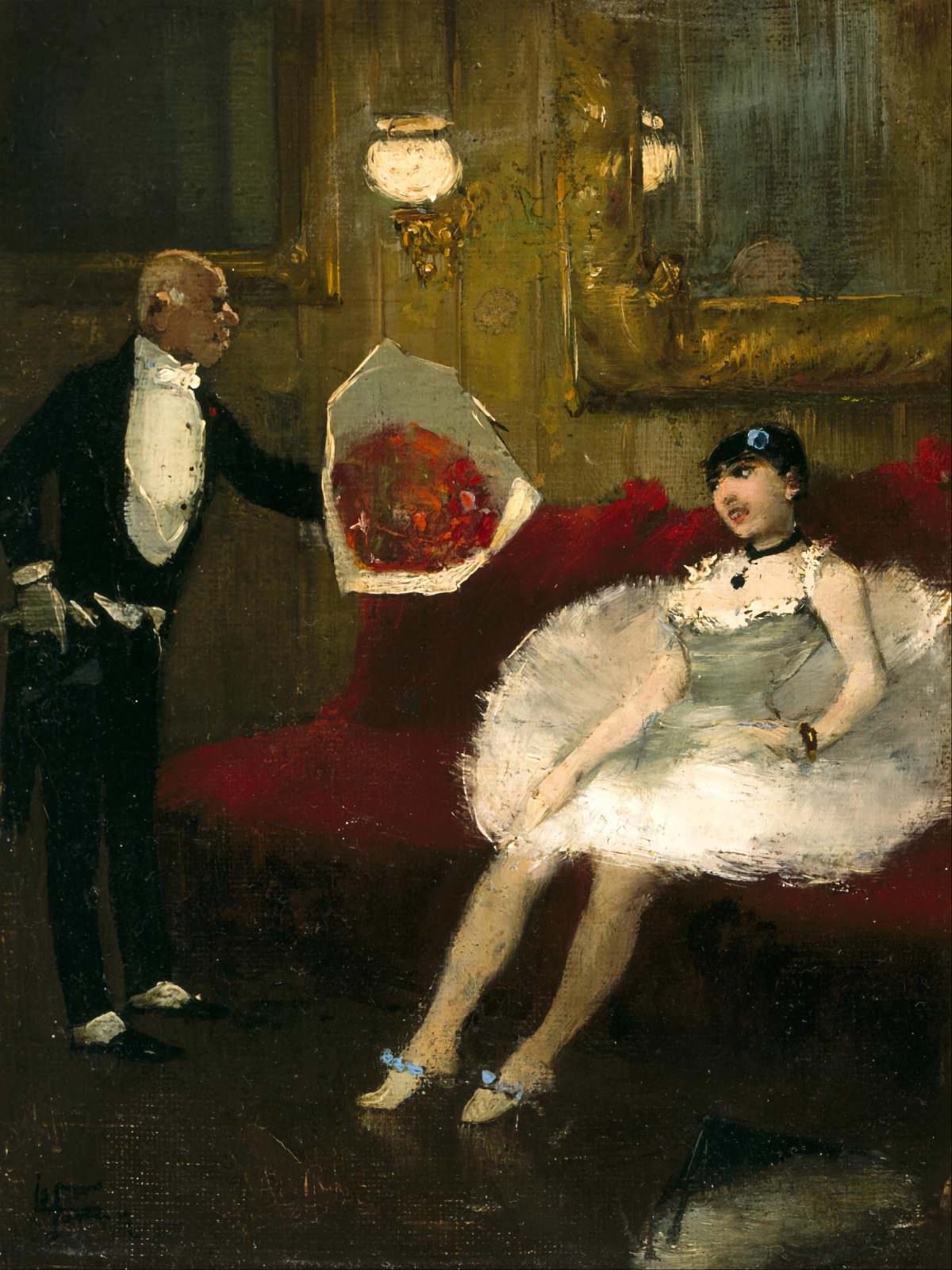
A hush of warm lamplight settles over Jean-Louis Forain’s *The Admirer* (1878), where a formally dressed man leans in with a bouquet, pausing at the edge of a plush red settee. Opposite him, a young woman reclines in a pale, frothy dress that catches the light, her posture relaxed yet watchful. The setting feels like an intimate corner of a fashionable interior—part drawing room, part stage—framed by dark walls and gleaming glass.
Forain builds the scene with brisk, confident brushwork: faces are suggested rather than minutely described, while the white of shirtfront and skirt flares against the murky background. The bouquet’s reds echo the sofa’s upholstery, pulling the viewer’s eye across the painting and back to the exchange between giver and recipient. Reflections, gilt frames, and a glowing sconce add a sense of nightlife and performance, as if the room itself is complicit in the drama.
Behind the courtship lies a sharper social observation, one characteristic of Forain’s depictions of modern Parisian manners—desire, money, and status hovering just beneath the paint. The man’s careful presentation and the woman’s poised distance suggest a negotiation as much as an admiration, leaving the emotional balance deliberately unresolved. For readers exploring 19th-century French art, this work offers an atmospheric glimpse of interior life, theatrical elegance, and the charged etiquette of looking and being looked at.