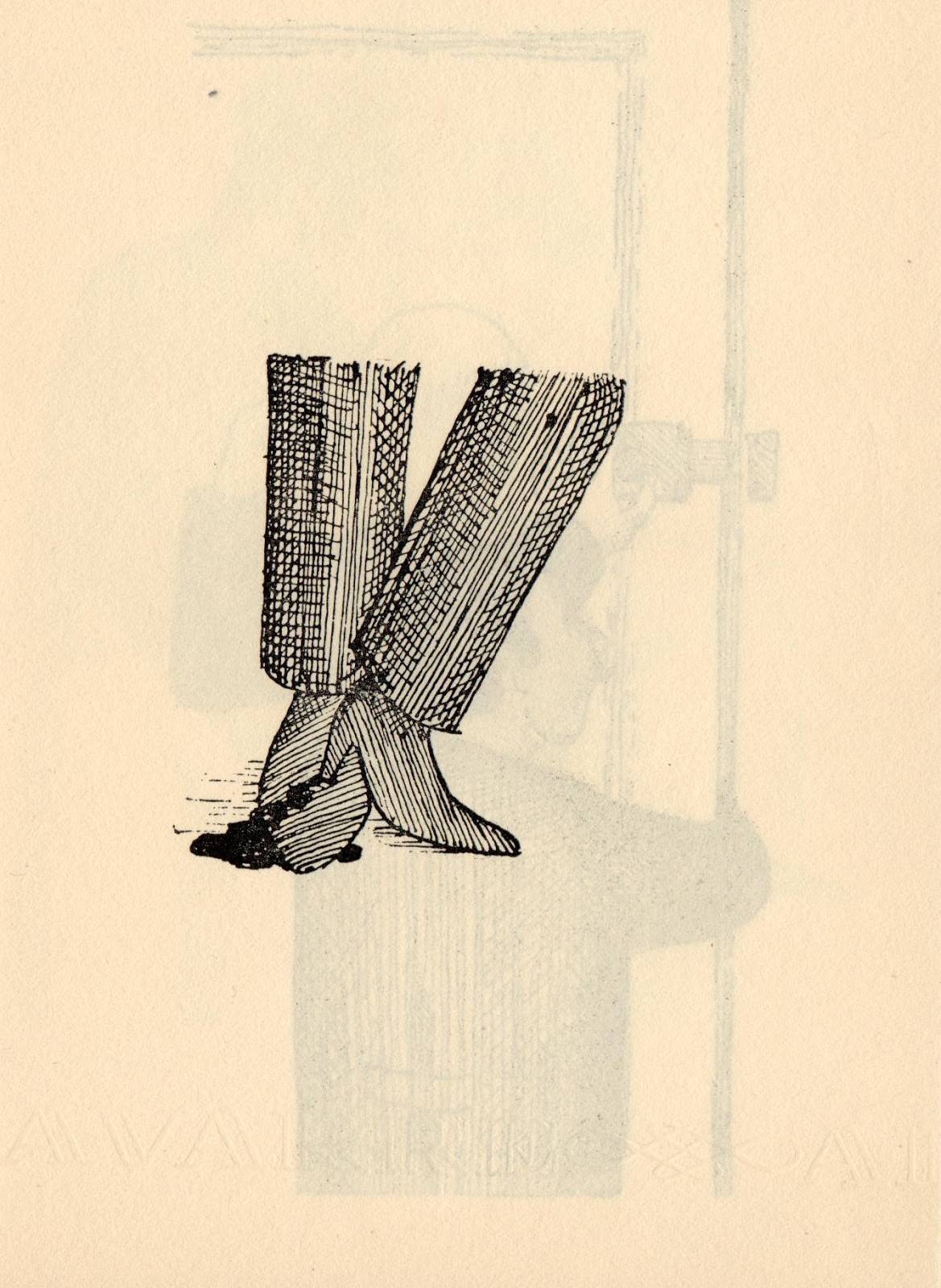
A small, stark drawing sits adrift on a wide field of paper, its quietness making the subject feel even more exposed. Two heavy, crosshatched forms dominate the scene like rigid pillars or looming boots, while a compact figure curls at their base, reduced to angles and pressure. The black ink’s density, contrasted against the pale background, turns restraint into a visual weight you can almost feel.
Roland Topor’s 1960 illustration, as framed by the post title, approaches masochism less as spectacle than as a distilled symbol—pain rendered through geometry, imbalance, and confinement. The exaggerated textures of the vertical shapes read like barriers, while the crouched body becomes the hinge point where dominance and surrender meet. That tension—between minimal lines and maximal implication—gives the artwork its unsettling power and keeps the viewer searching for meaning in what is left unsaid.
For readers interested in surreal illustration, transgressive art history, and the darker currents of 1960s graphic expression, this piece offers a compact lesson in how a single image can carry an entire psychological narrative. The composition invites discussion about control, vulnerability, and the way cartoons and line art can be used to explore taboo themes without explicit detail. Seen today on a WordPress page, it remains a provocative artifact—simple on the surface, yet difficult to forget.