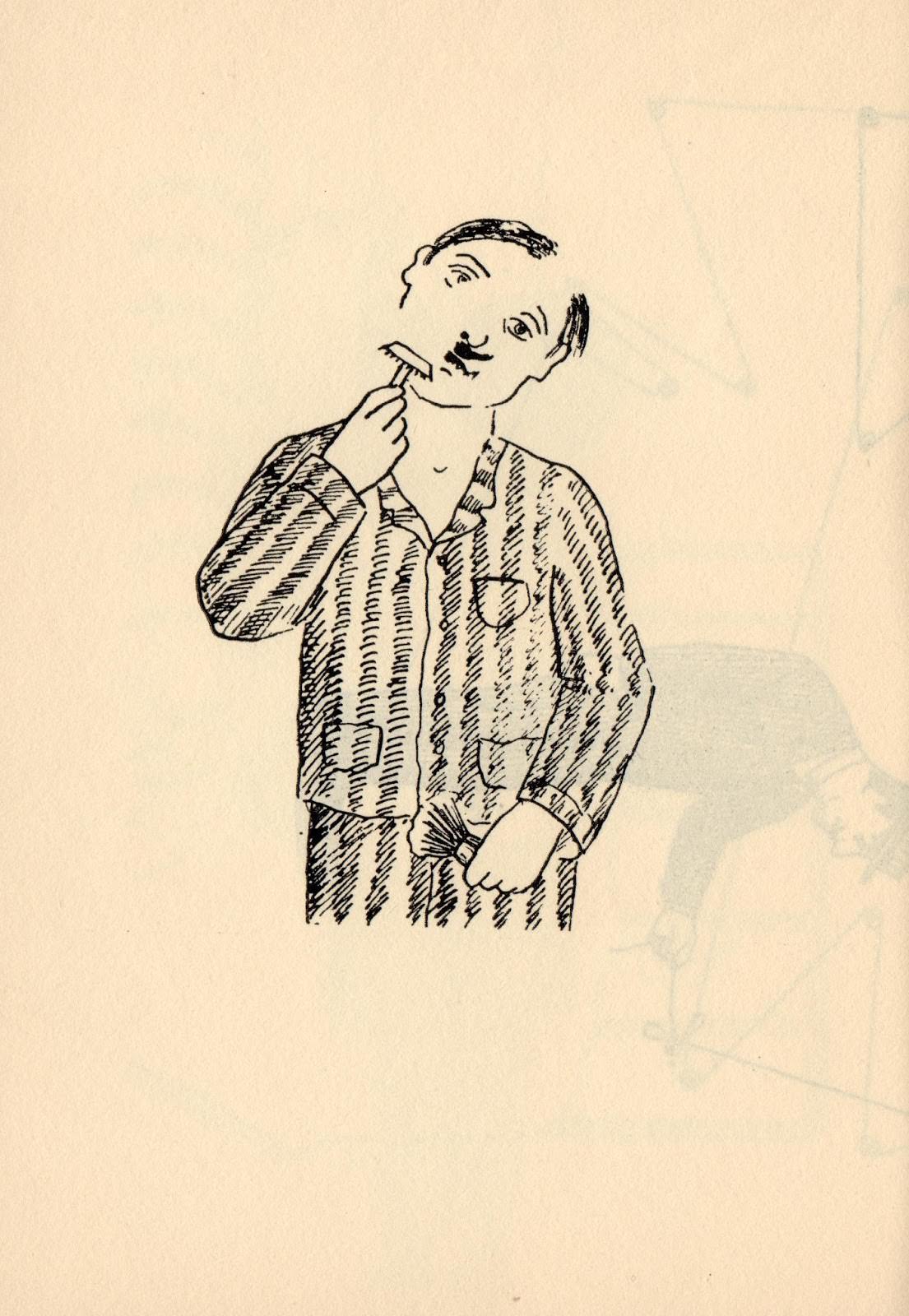
A lone figure in striped sleepwear leans into a small, deliberate act: a razor pressed to the tongue, the head tilted as if inviting discomfort rather than avoiding it. Rendered in spare black line on an open, nearly blank field, the illustration makes the body feel exposed—no room to hide behind scenery, only the ritual and the face that performs it. The cartoon-like simplicity sharpens the unease, turning a private moment into a stark emblem of self-directed pain.
Roland Topor’s 1960 illustration, referenced in the title, approaches masochism through irony and economy rather than spectacle. Crosshatched shading gives weight to fabric folds and a clenched fist, while the wide, uncertain eyes keep the scene suspended between comedy and cruelty. That tension—ordinary grooming transformed into something unsettling—captures how Topor’s art often blurs the line between the everyday and the grotesque.
For readers exploring masochism in art, this piece offers a compact lesson in how psychological themes can be communicated with minimal means. The empty background acts like silence around a confession, drawing attention to gesture, expression, and the implication of choice. As a historical artwork reproduced for this post, it invites careful viewing and discussion, revealing how a few strokes can evoke vulnerability, compulsion, and the strange theater of pain.