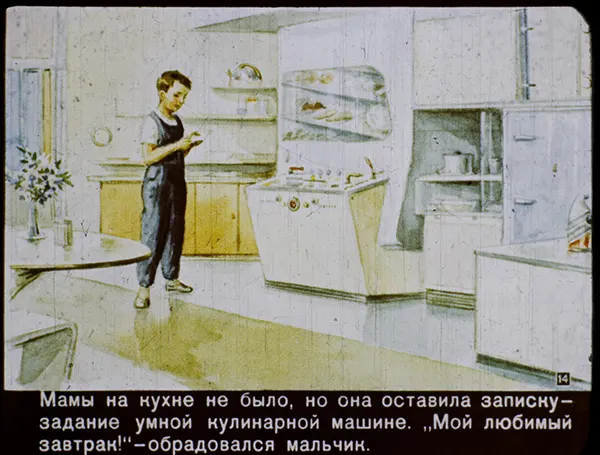
Morning light seems to wash over a streamlined kitchen where cabinets, counters, and a hefty “culinary smart machine” take center stage, hinting at a future where breakfast arrives at the push of a button. A boy stands nearby, intent on a small note in his hands, as if reading instructions left in place of a parent’s presence. The scene pairs domestic quiet with a subtle sense of wonder, turning an everyday routine into a miniature story about trust in technology.
Across the room, the appliances look less like simple tools and more like a coordinated system: tall storage, fitted work surfaces, and a prominent automated cooker that feels proudly displayed. The composition emphasizes order and efficiency—clean lines, uncluttered space, and the suggestion that modern design can tame the chaos of meal preparation. Even without specific names or a stated setting, the message is clear: this is a vision of home life reshaped by innovation.
In the title’s narrative—mother absent from the kitchen, a note left behind, and the delighted cry of “My favorite breakfast!”—the image becomes a charming piece of retro-futurism and social history. It reflects a period fascination with labor-saving devices, the promise of automation, and the marketing of convenience as progress. For readers interested in vintage kitchen technology, domestic history, and mid-century ideas of the “smart home,” this artwork offers a vivid, searchable window into how tomorrow’s breakfast once looked in the imagination.