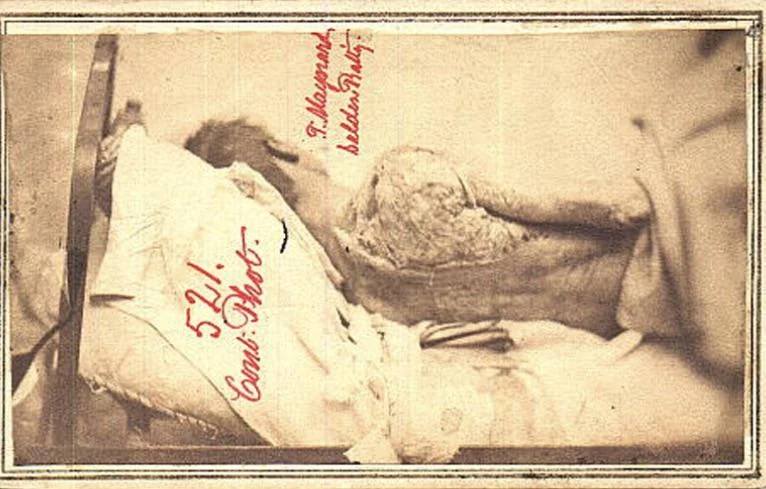
Stark and unguarded, the photograph confronts the physical cost of the Civil War through a wounded soldier lying on a cot, his body turned to reveal extensive injury and the aftermath of surgical treatment. Handwritten notes scrawled across the print—part medical record, part identification—remind us that wartime photography often served clinical and bureaucratic purposes as much as public memory. The framing is tight and intimate, leaving little room for sentimentality and forcing the viewer to reckon with the reality behind battlefield reports.
Long after the guns fell silent, amputee veterans carried these injuries into every corner of daily life: work, family, mobility, and the struggle to be seen as more than a broken body. For many men, limb loss meant learning to navigate pain, infection, and the limits of nineteenth-century prosthetics, while also negotiating pensions and the uneven support offered by governments and charities. Images like this one deepen our understanding of Civil War medicine, showing how surgeons documented wounds and procedures in ways that shaped later narratives about sacrifice and survival.
Within the broader story of surviving limb loss, this historical photo becomes a doorway into personal resilience and the era’s evolving ideas about disability. It invites readers to consider how veterans rebuilt identities after amputation, how communities responded, and how the war’s injuries lingered for decades in hospitals, homes, and public institutions. As a piece of Civil War history and medical documentation, it also offers valuable context for anyone researching amputee veterans, wartime surgery, and the human consequences of America’s Civil Wars.