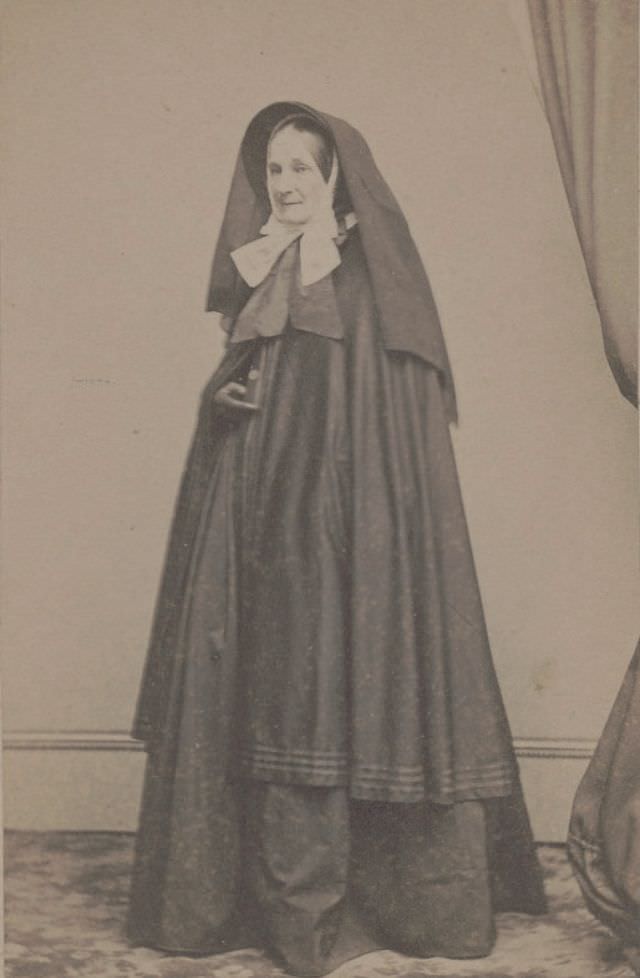
Adeline Blanchard Tyler—remembered by many as “Sister Tyler”—stands with a quiet steadiness in this studio portrait, her dark hooded cloak falling in heavy folds to the floor and a crisp white collar drawing the eye to her composed face. The plain backdrop and careful pose feel typical of mid-19th-century photography, yet the simplicity only heightens the sense of purpose in her expression. In an era when women’s wartime labor was often pushed to the margins, images like this preserve a rare, personal trace of service.
Baltimore, Chester, and Annapolis are more than place names in the title; they suggest the network of hospitals, transport routes, and temporary wards that shaped Civil War medicine. Nurses moved through crowded wards, shortages of supplies, and the constant churn of wounded soldiers arriving by rail and ship, doing work that demanded stamina as much as compassion. “Sister Tyler” evokes that tradition of caregiving—part practical skill, part moral resolve—at a time when organized nursing in the United States was still taking form.
For readers searching Civil War nurse history, women in the Civil War, or Baltimore and Annapolis wartime hospitals, this photograph offers a human anchor amid larger events. The draped curtain at the edge of the frame and the formal attire hint at the conventions of the photographer’s studio, but the story reaches far beyond the room where the shutter clicked. Take a moment to look closely: the measured posture, the restrained dignity, and the deliberate presentation all invite reflection on the often-unseen labor that kept soldiers alive and communities functioning during the Civil War.