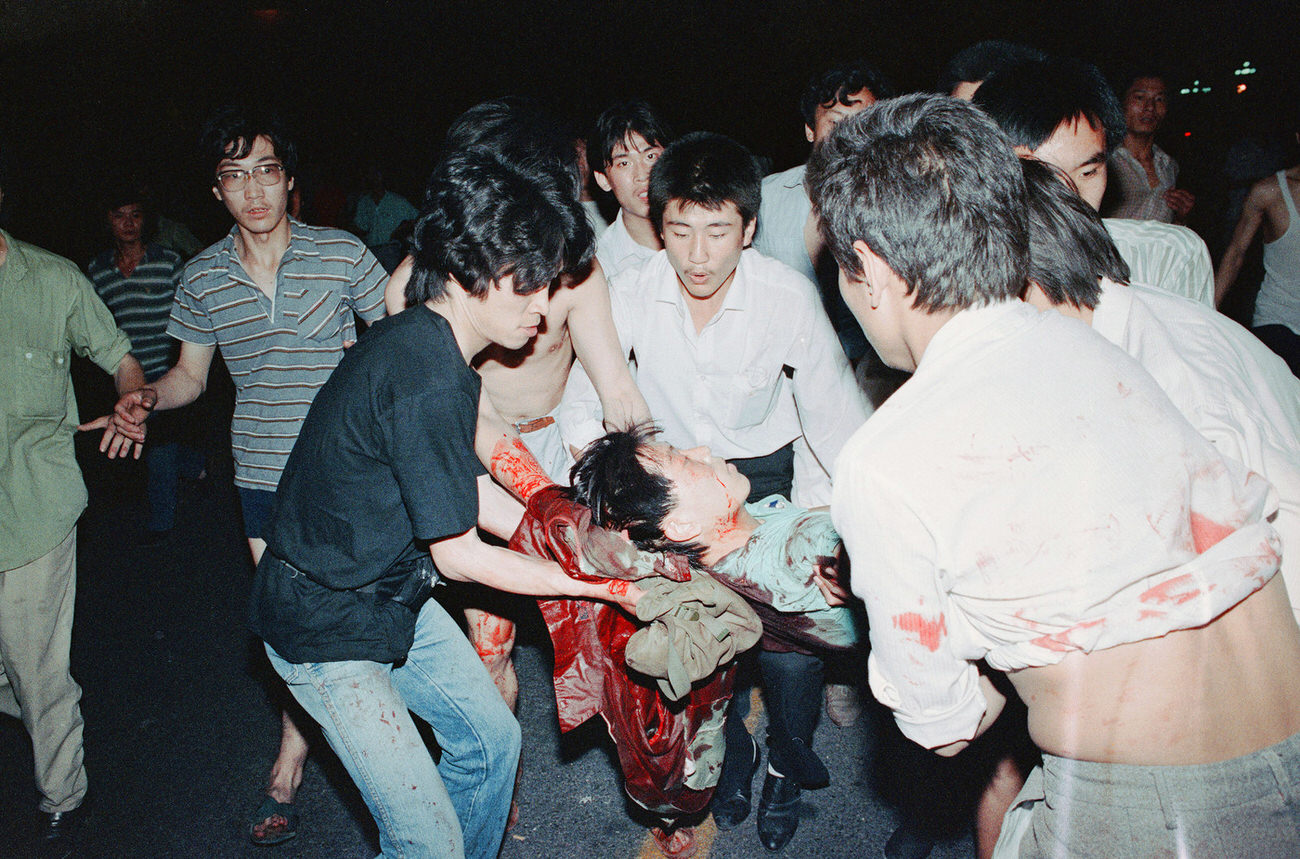
Under harsh nighttime lighting, a tight knot of demonstrators moves as one, lifting an injured man whose blood-streaked clothing and slack posture make the danger unmistakable. Faces crowd in from every direction—some focused, some stunned—while hands find shoulders, arms, and fabric to keep him from slipping to the ground. The street around them dissolves into darkness, turning the scene into a stark, close-up study of crisis and urgency.
What stands out is the instant transformation from protest to rescue: the crowd’s energy redirects from confrontation to care in the span of a moment. Several men brace the injured person’s torso and legs, their shirts and forearms smeared with blood, suggesting they have already been trying to stop the bleeding or pull him away from harm. In the context of civil wars and political unrest, such images capture how quickly public gatherings can tip into violence—and how ordinary people become improvised medics, stretcher-bearers, and protectors.
For readers searching for historical protest photography, civil conflict documentation, or eyewitness scenes from street demonstrations, this photo offers a raw reminder of the human cost behind the headlines. It records not only injury, but solidarity: strangers coordinating under pressure, refusing to abandon someone in the chaos. The title, “A group of demonstrators come to the aid of an injured man,” reads like a simple caption, yet the photograph itself speaks in gestures—of fear, responsibility, and the fragile line between resistance and survival.