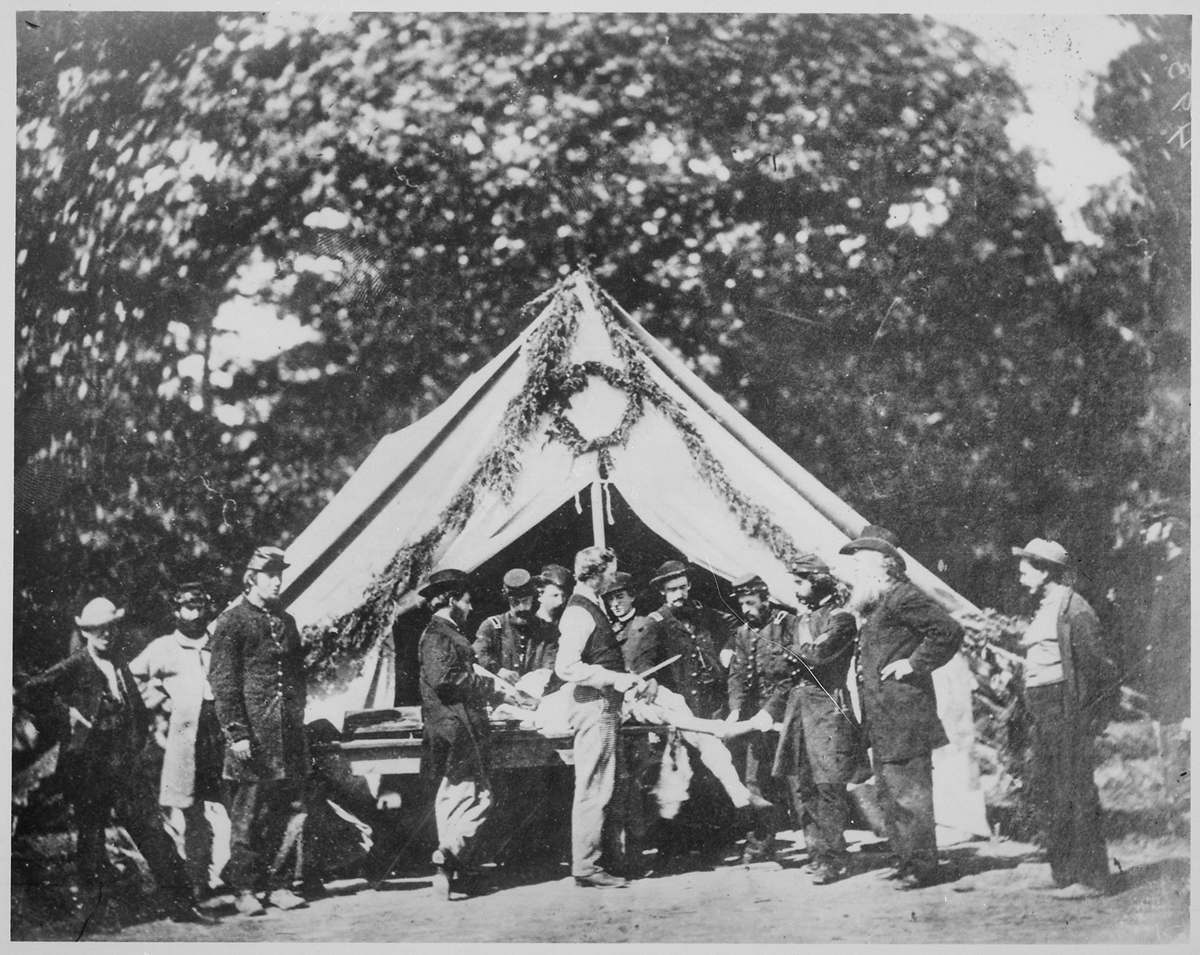
Outside a canvas hospital tent at Gettysburg in July 1863, a cluster of surgeons, assistants, and uniformed onlookers gathers around an improvised operating table. The scene is open to daylight and the curious eye, with the tent’s entrance framing the activity and leafy trees forming a dense backdrop. What feels shocking to modern viewers—major surgery performed in plain view—was a grim necessity when the wounded arrived in overwhelming numbers after the battle.
Field medicine during the American Civil War relied on speed, triage, and practical skill more than comfort or privacy, and amputations became an all-too-common response to shattered limbs. The men’s body language suggests a practiced routine: instruments at hand, attendants ready, and a patient held steady as the procedure proceeds. Photographs like this one pull attention away from flags and formations and toward the war’s human cost, where survival often meant permanent loss.
Gettysburg is remembered for tactics and turning points, yet images from its temporary hospitals reveal the vast logistical struggle behind the lines—tents raised, supplies moved, and care delivered under constant pressure. For readers interested in Civil War history, battlefield medicine, and the lived experience of soldiers, this photograph offers a sobering, unfiltered glimpse of emergency surgery in 1863. It stands as evidence not only of suffering, but also of the rough, rapidly evolving medical response that shaped thousands of lives long after the guns fell silent.