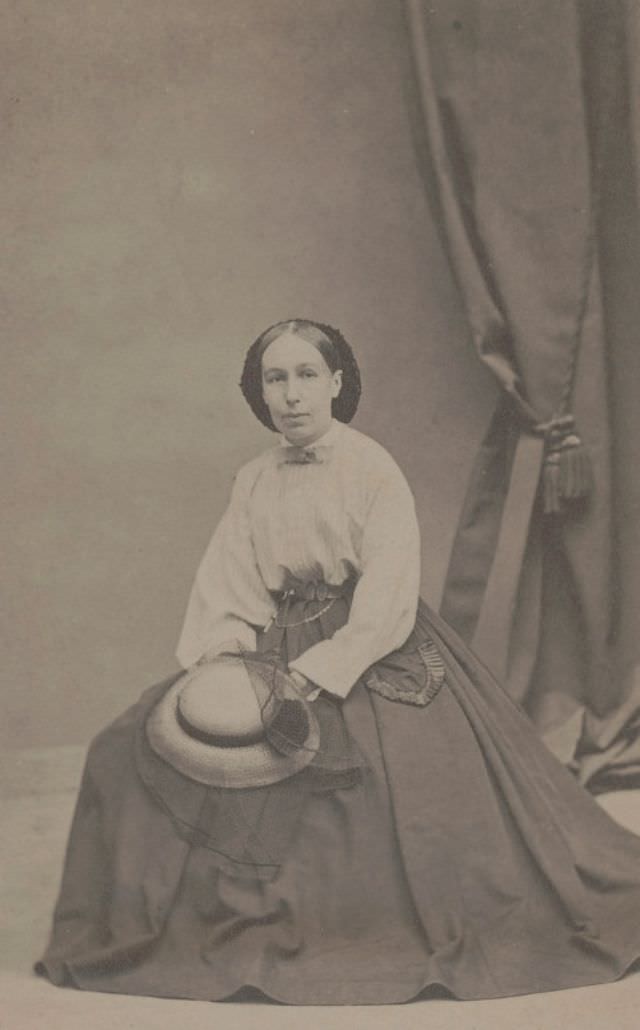
Poised in a quiet studio setting, Katharine Prescott Wormeley sits with calm composure, her gaze direct and thoughtful. The soft backdrop and gathered drapery frame a restrained portrait: a high-collared blouse, full skirt, and bonnet resting in her hands lend the scene a sense of everyday formality rather than battlefield drama. The simplicity of the pose invites a closer look at the person behind the public work—someone accustomed to responsibility, yet captured here in stillness.
Wormeley’s name is closely tied to Civil War relief efforts, especially through the U.S. Sanitary Commission, where organization and stamina mattered as much as compassion. While photographs rarely reveal the long hours of hospital administration or the practical demands of nursing, this image serves as a doorway into those histories—into the networks of volunteers, supplies, and medical care that supported soldiers far from home. Her later leadership at Lovell Hospital in Portsmouth, Rhode Island, underscores how wartime service could also be managerial and strategic, shaped by discipline as well as empathy.
For readers exploring Civil War history, women in medicine, or the early infrastructure of American humanitarian aid, this portrait offers a compelling anchor. It connects a recognizable face to larger themes: the professionalization of nursing, the logistics of relief work, and the expanding public roles women assumed during national crisis. As a historical photo for a WordPress post, it pairs well with discussions of the Sanitary Commission, hospital life in wartime Rhode Island, and the personal stories that illuminate how care was organized and delivered.