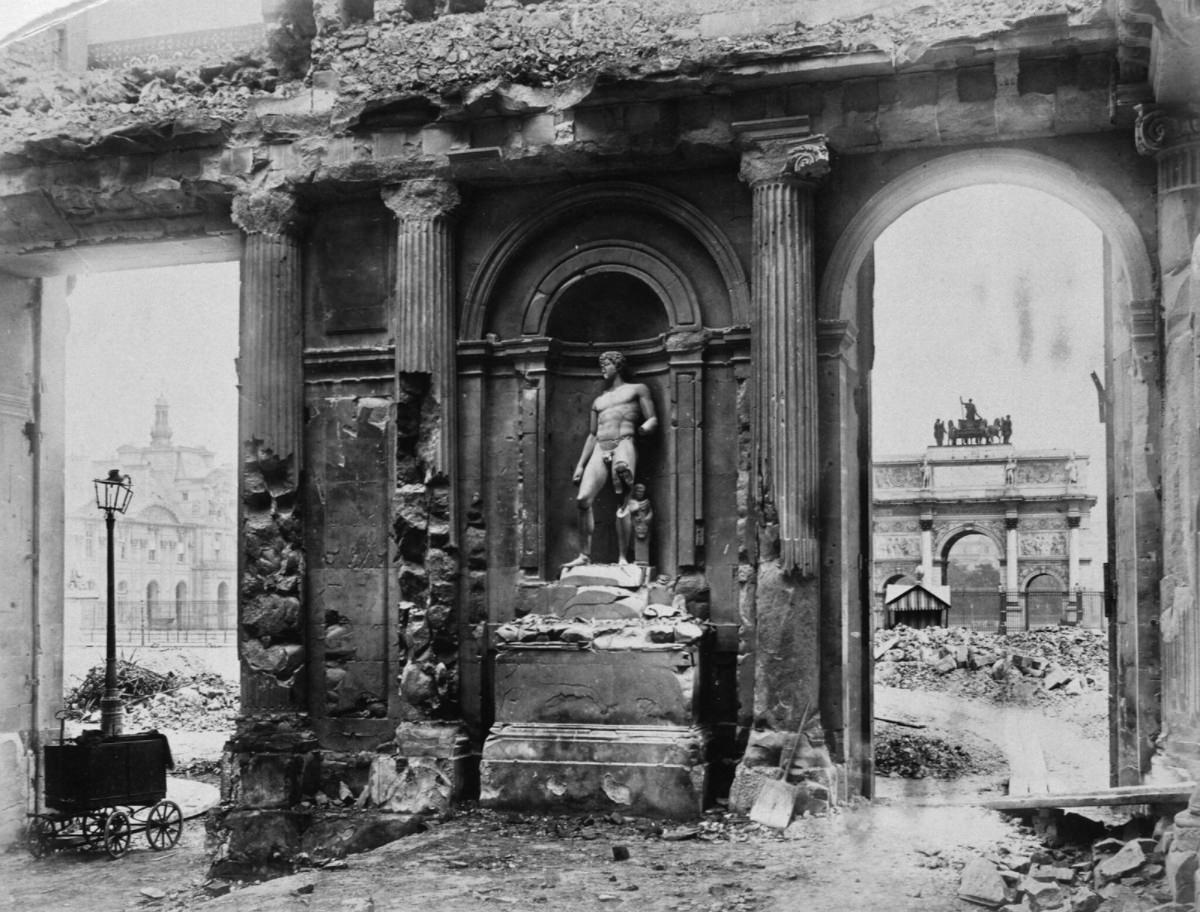
Broken masonry and scorched stone frame what remains of the Palais des Tuileries, turning a once-ceremonial interior into a rough-edged shell. A classical statue still stands in its niche, strangely intact amid collapsed cornices, cracked columns, and debris piled where walls and ceilings used to meet. Through the gaping openings, daylight pours in without resistance—an architectural wound made visible.
Looking past the ruin, the Arc de Triomphe appears in the distance, anchoring the scene in Paris and sharpening the contrast between national monumentality and sudden destruction. The photograph lingers on textures: soot-darkened surfaces, torn plaster, and the uneven rubble field that suggests hurried flames and later clearing. Even without crowds, the emptiness speaks of the upheaval that followed the Commune of Paris and the violence of civil war within the city’s heart.
The title’s reference to 1871 is more than a date; it marks a turning point when the Tuileries ceased to be a living palace and became a contested symbol of power, empire, and revolution. For readers searching the history of the Paris Commune, the burning of the Tuileries Palace, or the transformation of the Louvre and its surroundings, this image offers a stark, documentary pause. It invites reflection on how political conflict reshapes urban space—and how ruins, photographed and remembered, can outlast the regimes that built them.