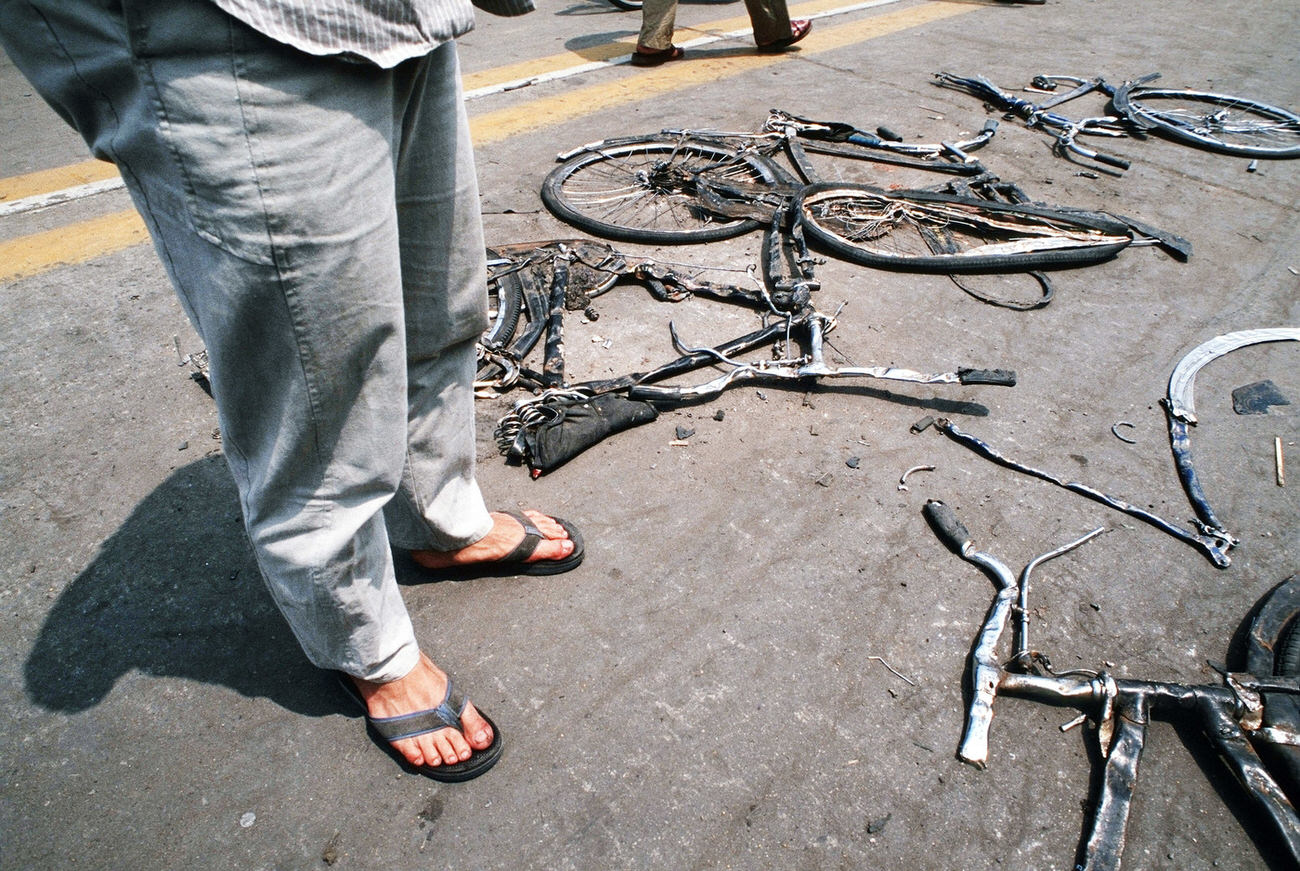
Sandaled feet pause at the edge of a street where bicycles have been crushed into twisted ribbons of metal, their wheels warped and frames peeled open like torn tin. Bits of rubber and spokes lie scattered across the pavement, while a few intact rims hint at what these everyday machines looked like only moments before. The scene is quiet in its composition, yet the damage speaks loudly of heavy force passing through an ordinary thoroughfare.
In the title’s telling, the Chinese army tanks have left behind a stark kind of evidence: not a battlefield panorama, but the wreckage of civilian life reduced to scrap. Bicycles—tools of work, commuting, and family errands—become unwilling markers of a violent episode, inviting locals to stop, stare, and measure what has changed. The casual posture of onlookers contrasts with the suddenness implied by the destruction, capturing how people absorb shock in real time.
For readers drawn to civil wars and state violence, the photograph offers an unflinching detail that historians value: the material trace of power on a public street. No faces dominate the frame, yet the human presence is unmistakable in the legs at the margins and the shared impulse to bear witness. As a historical photo, it reminds us how conflicts are often remembered through what they leave behind—broken objects, interrupted routines, and a city surface scarred by force.