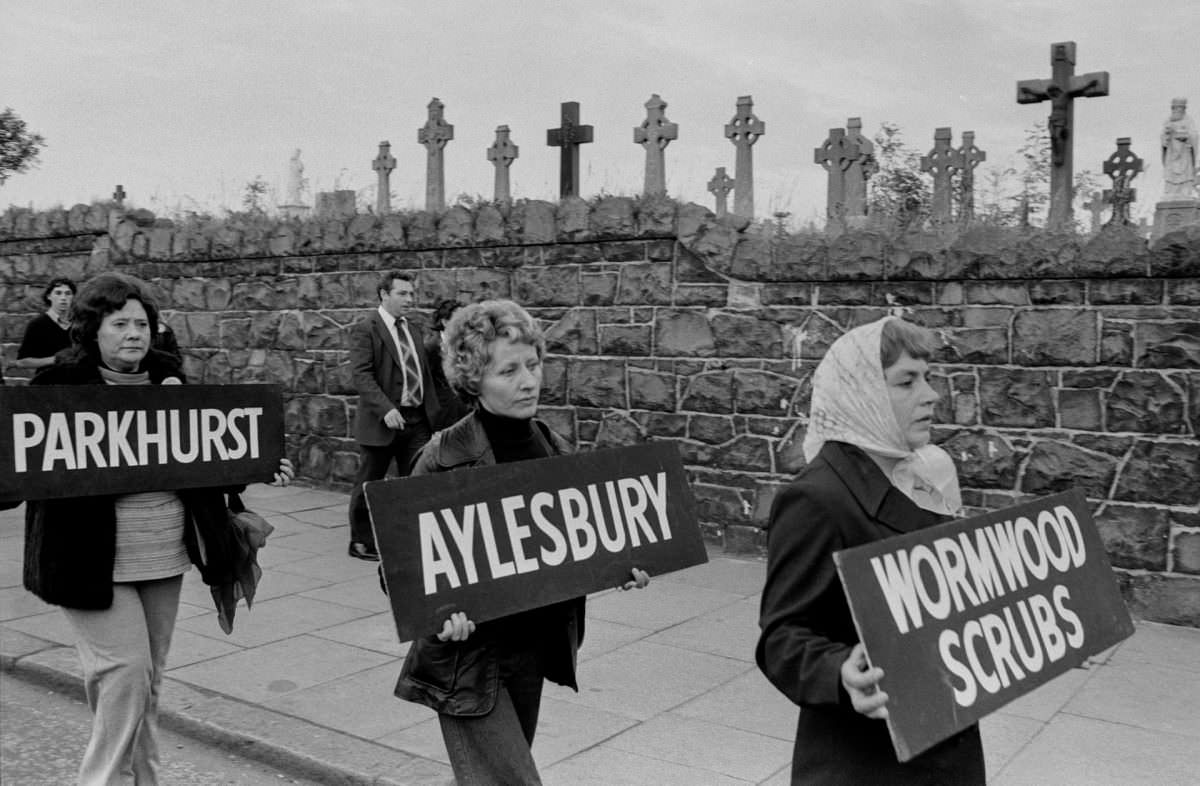
A line of women moves along a Belfast pavement in 1978, each carrying stark placards that read “PARKHURST,” “AYLESBURY,” and “WORMWOOD SCRUBS.” Behind them, a high stone wall topped with cemetery crosses creates a severe backdrop, amplifying the gravity of their message. Their coats, scarves, and set expressions suggest a determined public appeal rather than a fleeting demonstration.
The title points directly to their cause: protesting conditions in English jails, a subject that drew intense scrutiny during the turbulent years often remembered as Northern Ireland’s “civil wars.” By naming well-known prisons on hand-held boards, the marchers turn distant institutions into immediate, readable symbols, forcing passers-by—and later viewers—to confront what was being contested. The composition emphasizes movement and purpose, with the protest literally threading through ordinary urban space.
As a historical photo, it offers a grounded view of women’s activism and the ways prison issues became part of wider political debate across the United Kingdom. The tension between the everyday street scene and the funerary landscape beyond the wall hints at the broader costs of conflict and confinement without needing a single slogan beyond the prison names themselves. For anyone searching Belfast 1978, Northern Ireland protests, or campaigning about jail conditions, the image serves as a vivid, human-scale record of dissent.