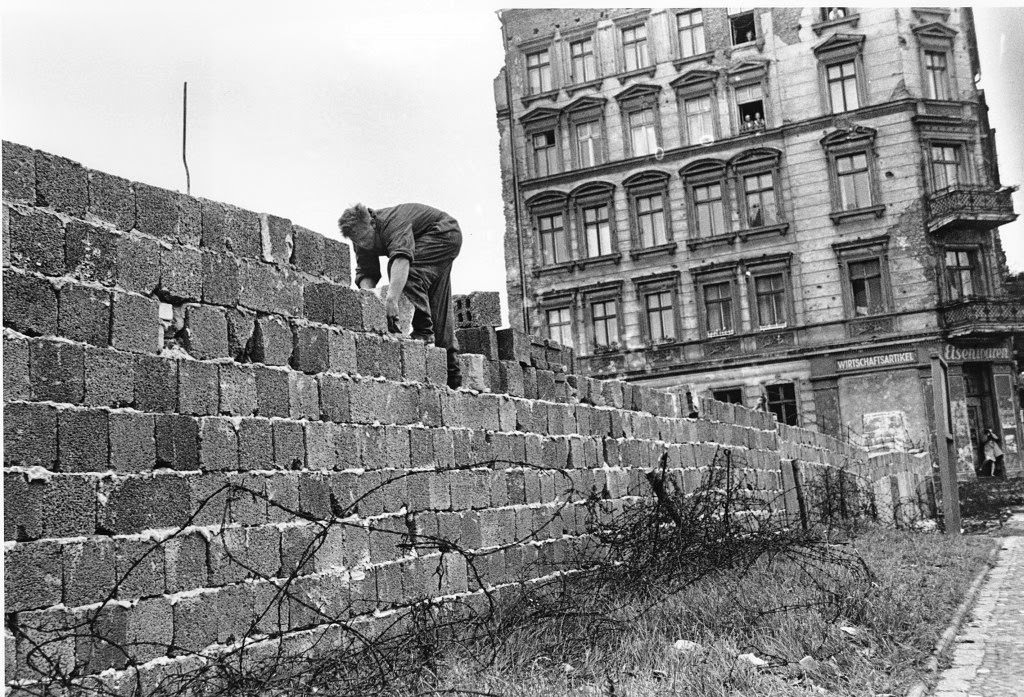
Bent over the rough top course of a new barrier, an East Berlin policeman works brick by brick as the Berlin Wall is raised to a formidable height. The uneven masonry and crude mortar lines give the scene a hurried, improvised feel, while coils of barbed wire at the base underline that this is not ordinary construction. In the title’s moment—September 9, 1961—the wall is already becoming more than a boundary; it is turning into a physical policy.
Behind the fresh blocks, the battered façade of a multi‑story building looms with dark window openings and scarred stonework, a reminder that Berlin was still living among the ruins and repairs of the mid‑20th century. A street-level shop sign and the quiet, watching windows suggest everyday life continuing in the shadow of sudden division. The contrast between domestic architecture and militarized masonry makes the separation feel intimate, as if a neighborhood has been split mid-sentence.
Cold War history often reads like speeches and treaties, yet here it is rendered in grit, weight, and posture—one man placing bricks, and a city’s movement narrowed by inches of concrete. The photograph speaks to the human scale of geopolitical conflict: labor performed under authority, space reorganized by force, and a border that would reshape families and routines on both sides of East and West Berlin. For readers searching Berlin Wall 1961 images or East Germany border photos, this frame offers an unvarnished view of how division was literally built into the streetscape.