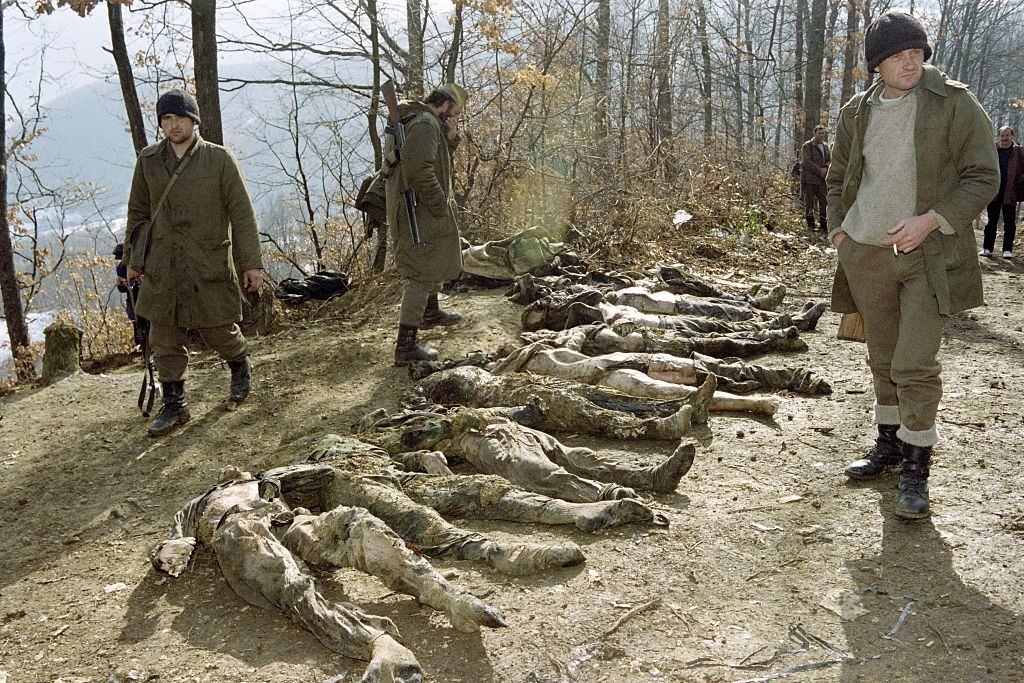
Along a muddy woodland track in eastern Bosnia, armed men in heavy coats and wool caps stand over rows of bodies laid out on the ground, their uniforms and clothing stained with earth. Bare trees and a pale winter sky frame the scene, while onlookers linger at the edge of the path as if unsure where to place their feet. The title identifies the setting as Kamenica and connects the discovery to the Bosnian War on February 17, 1993, when Bosnian Serbs said the dead were victims of killings by Bosnian Muslims.
What makes the photograph so unsettling is its ordinary backdrop: a rural road, a thin line of forest, and a cold slope falling away to the left—places that could belong to any quiet countryside. The bodies appear arranged for viewing or documentation, turning the landscape into a temporary, grim ledger of loss. Faces are distant or obscured, yet the posture of the living—hands in pockets, rifles slung low, eyes cast away—suggests shock, vigilance, and the hardening routine that civil war forces onto those who remain.
Images like this sit at the crossroads of evidence and narrative, where claims of responsibility, grief, and propaganda can collide. For readers searching the history of the Bosnian conflict, Kamenica, mass grave discoveries, and the cycle of retaliatory violence, this frame offers a stark entry point into how communities experienced war on the ground. It also serves as a reminder that behind every headline about civil wars are bodies counted, stories contested, and landscapes permanently marked.