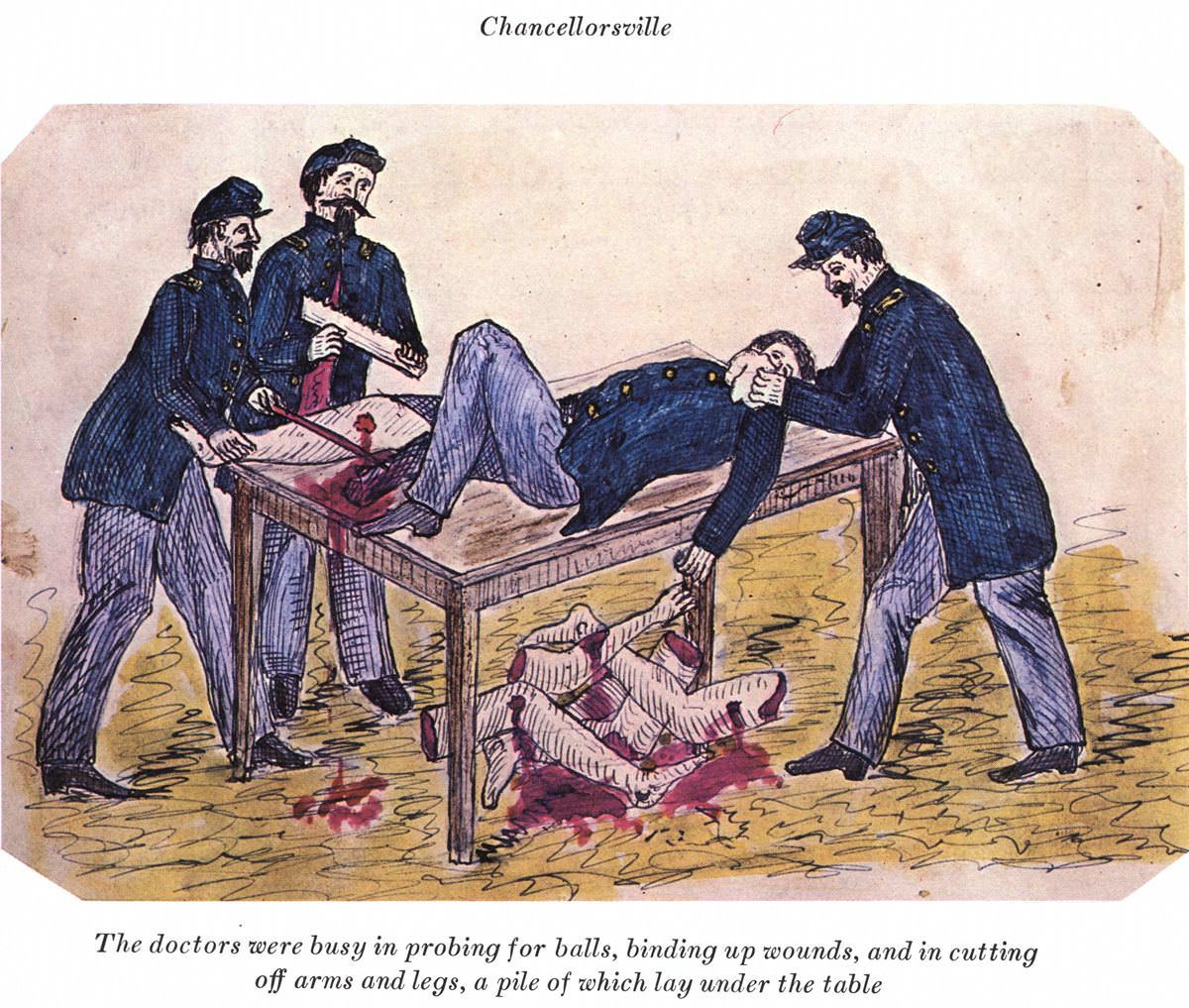
“Chancellorsville” sits at the top of this stark period illustration, and the scene below leaves little room for romantic notions of battlefield glory. A wounded soldier lies on a rough table while uniformed medical staff work with grim efficiency, and severed limbs—rendered with unsettling directness—collect beneath the boards. The caption’s blunt language about “probing for balls,” binding wounds, and cutting off arms and legs underscores how routine extreme trauma care became during the Civil War.
Amputation was not only a surgical decision but the beginning of a lifelong negotiation with pain, mobility, and identity, and this post explores that human aftermath. The wartime hospital became a turning point where survival often depended on speed and sanitation rather than sentiment, and many men lived because limbs were sacrificed. For Civil War amputee veterans, the end of combat frequently marked the start of a different battle: learning to work, travel, and be seen in a changed body.
From the blood-stained floor to the improvised operating table, the image invites readers to consider what “surviving” truly meant in nineteenth-century America. It also gestures toward the broader history behind these stories—prosthetics, pensions, family caregiving, and the public memory of disabled veterans in the years that followed. If you’re searching for Civil War medical history and the lived experiences of amputee soldiers, this feature connects the brutal immediacy of wartime surgery to the long arc of recovery and resilience.