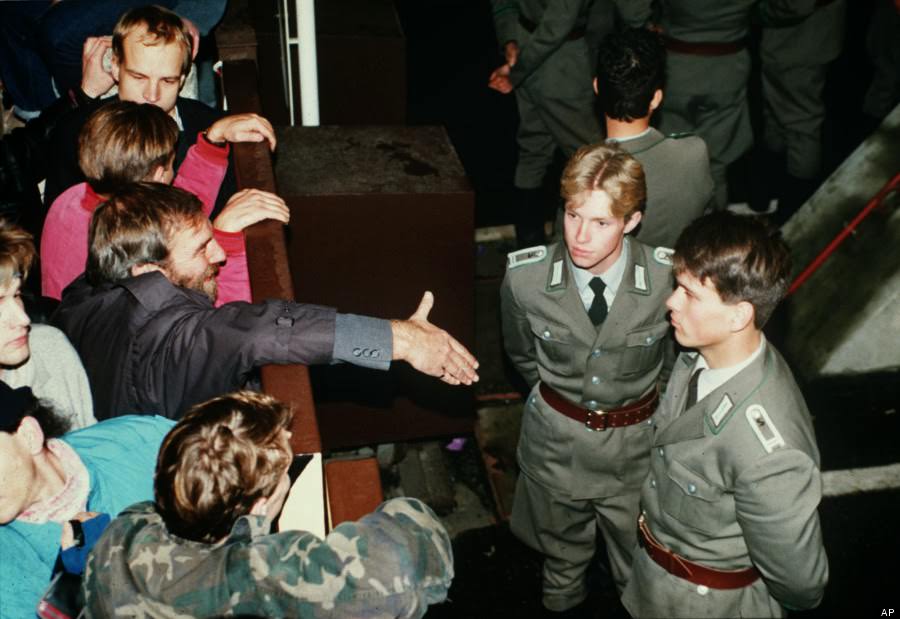
A single outstretched hand reaches across the border fence near Checkpoint Charlie, hovering in a space that had long been defined by orders, surveillance, and fear. On the eastern side, East German border policemen stand close together in uniform, their posture controlled and their faces guarded as they refuse the gesture. Around them, onlookers lean forward from the West Berlin side, crowding the barrier and pressing toward a moment that feels both intimate and politically charged.
Taken on Nov. 10, 1989, the scene lands in the uneasy hours after the Berlin Wall’s opening, when celebrations mixed with uncertainty and the rules had not yet caught up with reality. The handshake—simple, universally understood—becomes a test of what is possible when an old system is still physically present, even as its authority is rapidly draining away. The fence remains a hard line, and the refusal exposes how quickly history can turn without instantly softening the habits of decades.
For readers searching Berlin Wall history, Checkpoint Charlie photos, or the human side of Cold War borders, this image offers a vivid study in tension rather than triumph. It reminds us that revolutions are lived in small negotiations: a glance, a step forward, a hand extended and left hanging. In that narrow gap between citizen and guard, you can sense a divided city beginning to reconnect—while the machinery of division, for one more night, still holds its ground.