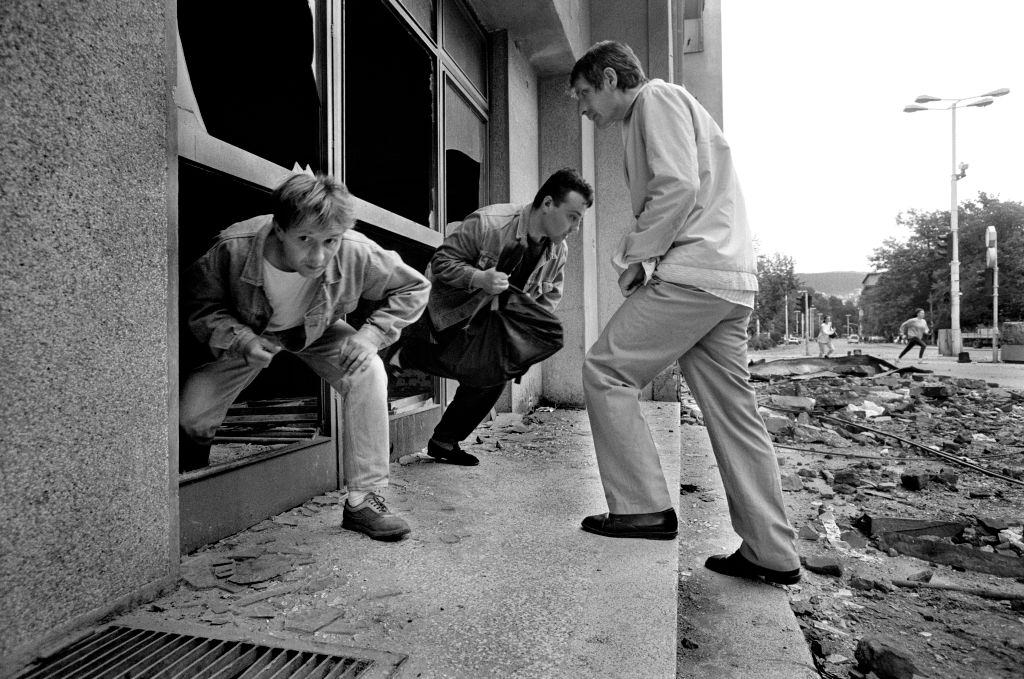
Pressed low against a shattered shopfront, three men scramble through broken windows and along a narrow ledge, using the building’s frame as the only cover from sniper fire. One crouches mid-step with his shoulders hunched, another clutches a bag as if grabbed in haste, while a third pauses to judge the street beyond. Jagged glass, bent frames, and fragments underfoot turn an everyday storefront into an improvised escape route.
Along the roadway, rubble and torn pavement suggest recent blasts and the grinding damage of urban warfare, with open sightlines that offer little protection. In the distance, figures move cautiously across the exposed street, emphasizing how ordinary errands and survival tasks become perilous under siege conditions. The tension in their body language tells the story as clearly as the debris: speed matters, but so does staying unseen.
Dated July 1992 and framed by the post’s theme of civil wars, the photograph evokes a period when snipers and street fighting made civilian movement a calculated risk. It’s a stark reminder of how conflict reshapes public spaces—shops, sidewalks, and roads—into corridors of danger and decision. For readers searching for historical war photography, siege life, and the human experience of civil conflict, this image offers an unfiltered glimpse of fear, improvisation, and endurance.