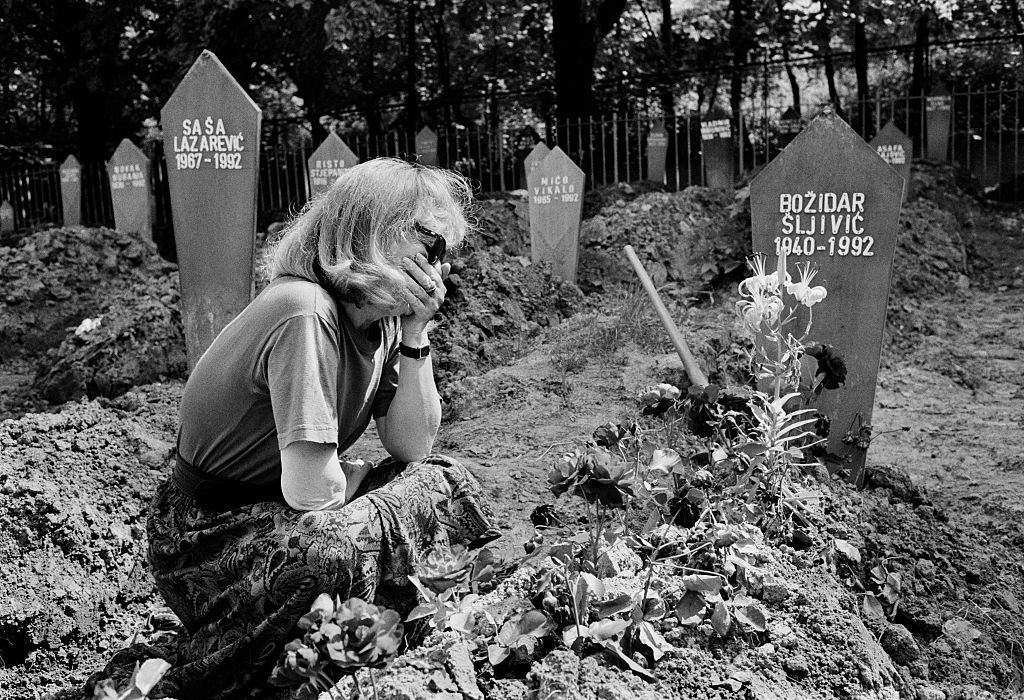
Kneeling in the churned soil of Lion Cemetery in Sarajevo, a woman presses her hand to her face as if to hold back what cannot be held. Fresh mounds rise around her, uneven and raw, with simple markers standing like quiet sentinels in the background. The year in the title—1992—anchors the scene in the opening violence of the Bosnian War, when grief arrived not as an exception but as a daily condition.
Across the frame, the cemetery reads like an urgent ledger of loss: hurried burials, closely spaced graves, and headstones bearing names and years that end abruptly. A few flowers and scattered leaves soften the ground, yet they also underline how recent everything is, how quickly the living must learn new rituals. The woman’s posture—folded inward, still—turns this wartime photograph into an intimate study of mourning amid civil war.
Lion Cemetery, known locally as Lav Cemetery, became one of Sarajevo’s most visible landscapes of bereavement during the siege, and images like this help explain why the conflict remains so deeply remembered. No grand battlefield is needed to convey the scale of suffering; a single grave and a single mourner speak volumes about what war does to families and cities. For readers searching the history of Sarajevo in 1992, the Bosnian War, or the human cost of civil wars, this photograph offers a stark, unforgettable point of entry.