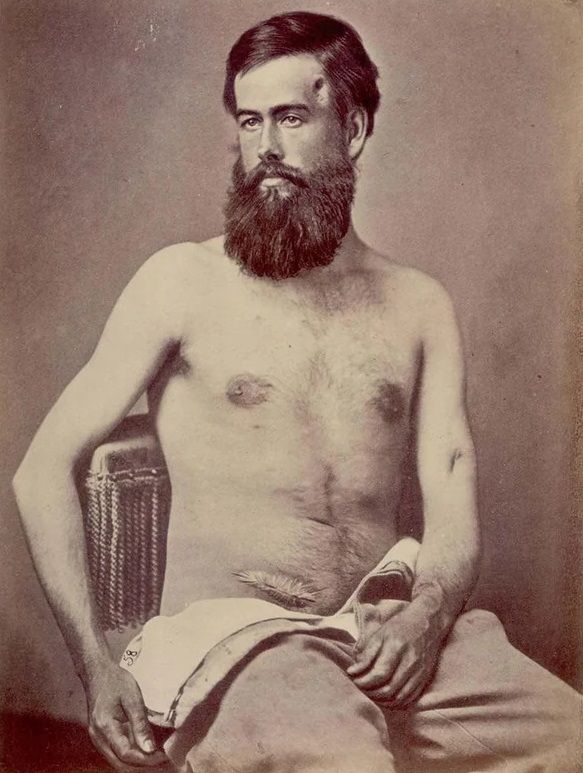
Private Edson D. Bemis of Company K, 12th Massachusetts, faces the camera with a steady, unsentimental calm that feels as deliberate as any uniform. Seated bare-chested in a studio setting, he becomes both soldier and specimen, offering his body as testimony to what the Civil War did at close range. The strong beard and composed gaze contrast with the quiet vulnerability of the pose, where endurance is communicated without theatrics.
What draws the eye, in light of the title, is the story carried by his left arm—wounded at Antietam by a musket ball that fractured the shaft of the left humerus. The injury is not framed as heroic decoration but as hard evidence of battlefield trauma and the brutal mechanics of nineteenth-century firepower. In photographs like this, surgeons, historians, and later readers could study the physical consequences of combat as carefully as they read after-action reports.
Beyond its immediate medical meaning, the portrait speaks to the broader world of Civil War photography and the era’s effort to document suffering with the tools available. Bemis’s posture, the plain background, and the matter-of-fact presentation echo a time when recovery could be long, uncertain, and permanently altering. For anyone researching Antietam, the 12th Massachusetts, or musket-ball wounds and wartime medicine, this image offers a direct, human anchor—one veteran’s body standing in for a nation’s cost.