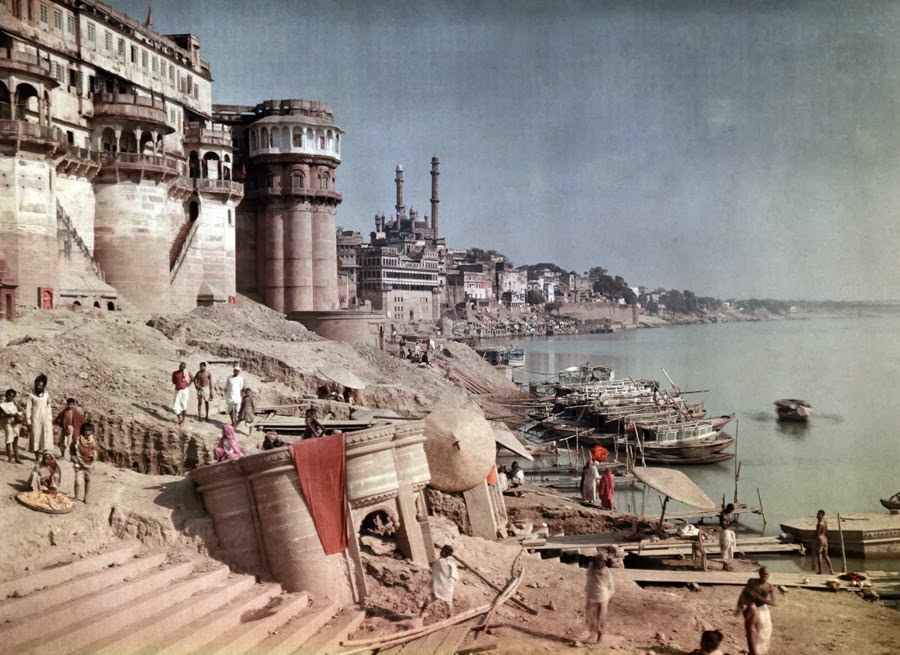
Morning light drifts across the Ganges at Varanasi, softening the hard lines of stone steps and riverfront walls into a hazy glow. Along the ghats, the city rises in stacked terraces—palace-like façades, balconies, and sturdy towers—built to meet the water’s edge and withstand the river’s moods. The careful colorization lends warmth to the masonry and sky, making the scene feel immediate rather than distant.
At the shoreline, everyday motion gathers around a sacred purpose: figures move along the steps, pause near the water, and wade in where the river is calm. Boats crowd the bank with their ribs and oars visible, ready to ferry pilgrims and sightseers along the ghats, while a lone craft drifts farther out into open water. The river becomes both pathway and ritual space, a living boundary where prayer, labor, and travel overlap.
Varanasi’s bathing places have long been described as thresholds—between city and river, the personal and the communal, the ordinary and the devotional. In this view, the architecture is more than a backdrop; it frames a continuous rhythm of arrivals, offerings, washing, and departure that defines the spiritual geography of the Ganges. For readers searching for historical Varanasi, Ganges river ghats, or sacred bathing traditions in India, the image offers a richly textured glimpse of a riverfront culture shaped by faith and daily life.