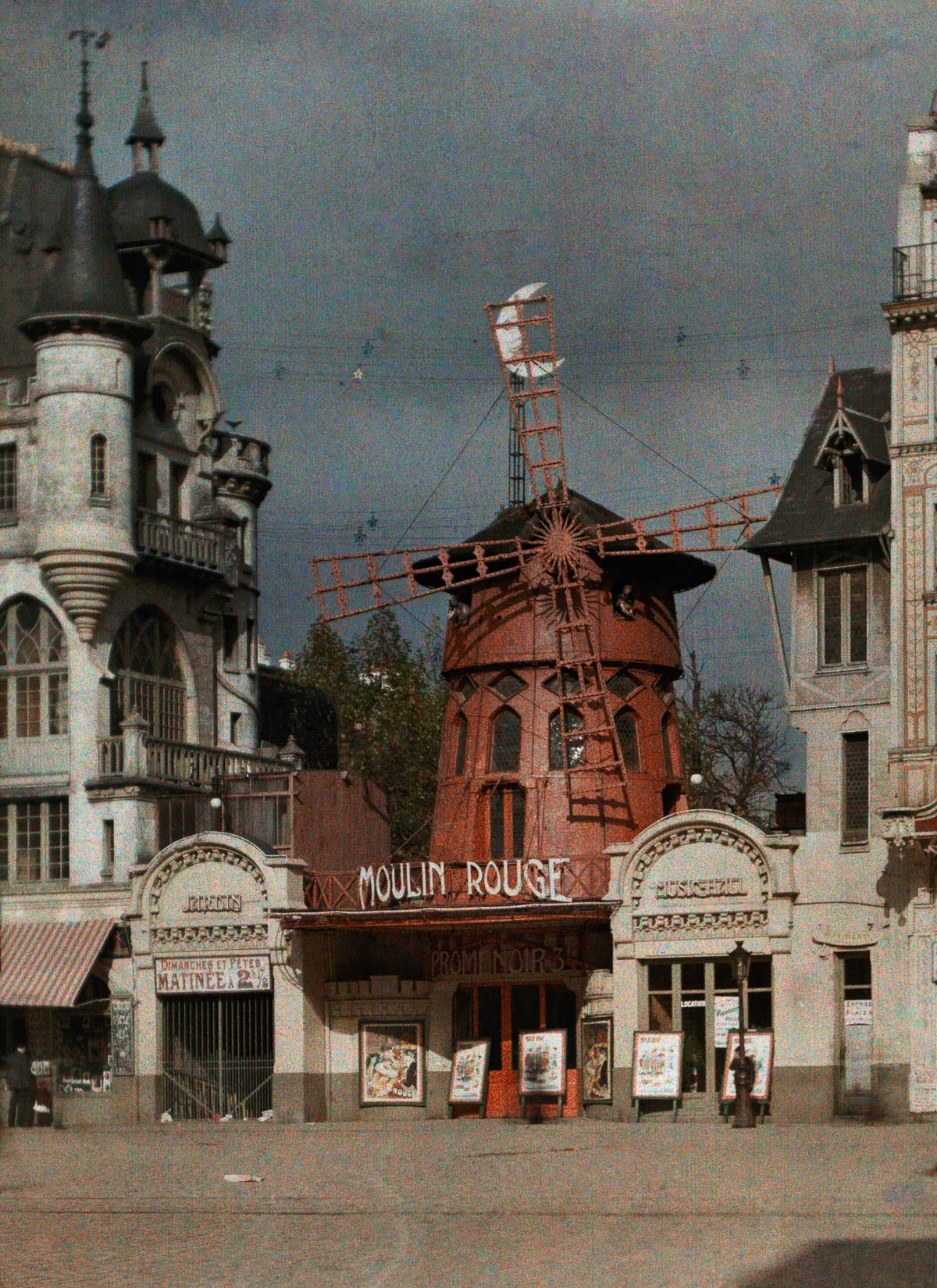
Beneath a brooding Paris sky, the famous windmill of the Moulin Rouge rises in warm red tones, its sails cutting a bold silhouette against the streetscape. The colorization draws the eye to the venue’s theatrical façade, where posters and display boards promise nightlife and spectacle, while ornate neighboring buildings frame the entrance like a stage set. Even without crowds, the scene hums with the anticipation that made Montmartre a magnet for revelers and onlookers in the 1920s.
Details at street level invite a slower read: iron gates, signboards, and the layered typography of advertisements hint at the business of entertainment between shows. The surrounding architecture mixes turreted fantasy with Parisian practicality, a reminder that this district balanced everyday life with performance culture. In the interwar years, places like this helped define the city’s modern identity—where music halls, cafés, and cabarets shaped how Paris was imagined abroad.
Color, even when added later, can restore the emotional temperature of an era, and here it turns a well-known landmark into something newly immediate. The red mill becomes more than an icon; it feels like a working façade facing an ordinary day, waiting for evening to transform it again. For anyone searching “Paris 1920s photo,” “Moulin Rouge colorized,” or “Montmartre vintage Paris,” this image offers a vivid doorway into the city’s glittering, complicated past.