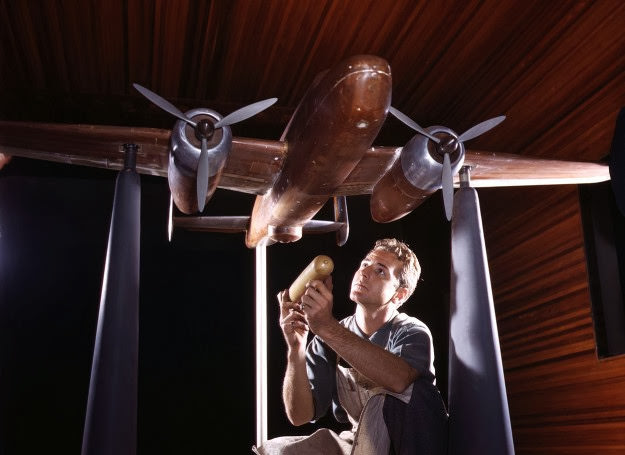
Under the warm tones of a careful colorization, a twin‑engine B‑25 scale model hangs above its handler, the polished surfaces catching the light as if already in motion. The miniature aircraft’s propellers, nacelles, and broad wingspan are rendered with the kind of precision that suggests more than a display piece—this is a working instrument, built to answer hard questions about lift, drag, and stability before metal is ever cut for full‑size production. The ceiling slats and stark supports frame the scene like a stage for wartime engineering.
At North American Aviation’s Inglewood, California plant in 1942, such models were essential tools for wind tunnel tests, where air could be made to behave predictably and flaws could be discovered safely. A technician focuses on the underside of the fuselage, holding a small component in hand, as though checking fittings or preparing the model’s mounting and measurement points. The posture and concentration tell their own story: aviation progress was often incremental, measured in adjustments, rechecks, and the quiet confidence of skilled labor.
Behind the headline history of the B‑25 Mitchell lies this kind of workshop reality—experimentation, instrumentation, and the translation of theory into hardware. For readers interested in WWII aviation, aerodynamics, and the industrial backbone of American aircraft manufacturing, the photograph offers a vivid glimpse into how combat aircraft were refined long before they reached the runway. It’s a reminder that the decisive battles of the air began in places like wind tunnel rooms, where a small model could guide the future of a full‑scale bomber.