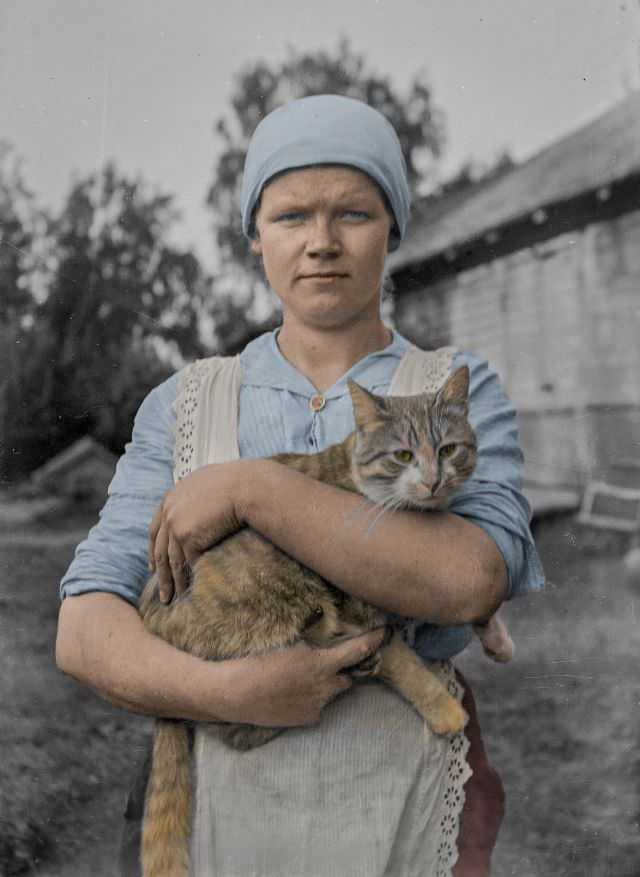
A steady, direct gaze meets the camera as a young woman stands outdoors with a large tabby cat folded securely in her arms. Her pale headscarf and simple working dress, trimmed with a light apron, place the scene in everyday life rather than staged studio formality. Behind her, a wooden building and soft, out-of-focus foliage suggest a yard or homestead setting, grounding the portrait in the textures of rural routine.
Colorization brings an immediate intimacy to the 1910s moment attributed in the title to the Finland-Swedish poet Edith Södergran, whose circle and era continue to fascinate readers of Nordic literature. The muted blues of the woman’s clothing and the warm browns of the cat’s coat lend quiet realism to the composition, while the animal’s calm, heavy presence adds a domestic tenderness. Small imperfections—specks, scratches, and uneven tones—remain visible, reminding us that this is an aged photograph even as its colors feel newly alive.
Seen today, the image reads as more than a charming portrait with a pet; it becomes a glimpse into how people chose to be remembered when cameras were still relatively uncommon in daily life. The woman’s firm hold and composed posture convey both responsibility and affection, a balance many households would have recognized. For anyone searching for Edith Södergran photographs, early 20th-century Finnish-Swedish cultural history, or carefully colorized archival images, this post offers a striking, human-scale window into the 1910s.