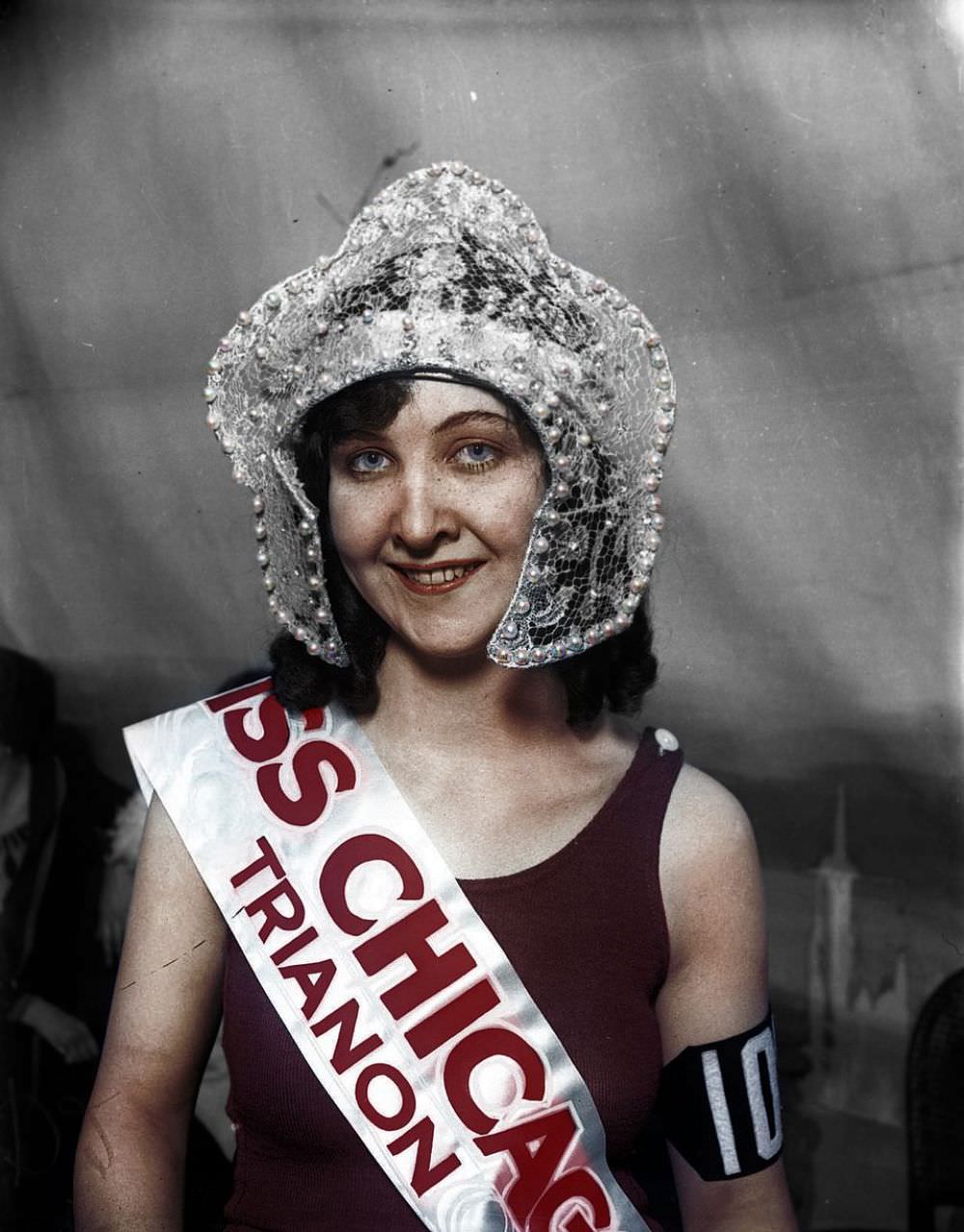
Mae Greene, only 18, faces the camera with an easy smile beneath an ornate lace-and-pearl headdress, her “Miss Chicago” sash cutting boldly across a dark sleeveless dress. A numbered armband marks her as a contestant, while the softly blurred backdrop keeps attention on her expression and the careful details of her attire. The colorization adds a new immediacy—warm skin tones, crisp lettering, and the sheen of beadwork—bringing a 1920s pageant portrait out of the archive and into the present.
Chosen as Miss Chicago 1926 from a field of 4,000 rivals at the Trianon Ballroom, Greene’s win hints at the scale and spectacle that citywide beauty contests had become in the Jazz Age. Ballrooms were not only dance floors but social stages where modern fashion, publicity, and ambition met under bright lights. In that world, a title could open doors to performances, appearances, and the swirling attention of newspapers hungry for a fresh face.
What makes this historical photo linger is its blend of pageantry and personhood: the formal trappings of competition paired with a direct, human gaze. For readers searching Chicago history, 1920s culture, or the story behind Miss Chicago 1926, the image serves as a vivid entry point into an era when glamour was carefully constructed and proudly displayed. Seen today, it also invites quieter questions about how young women navigated fame, expectations, and opportunity in a rapidly changing city.