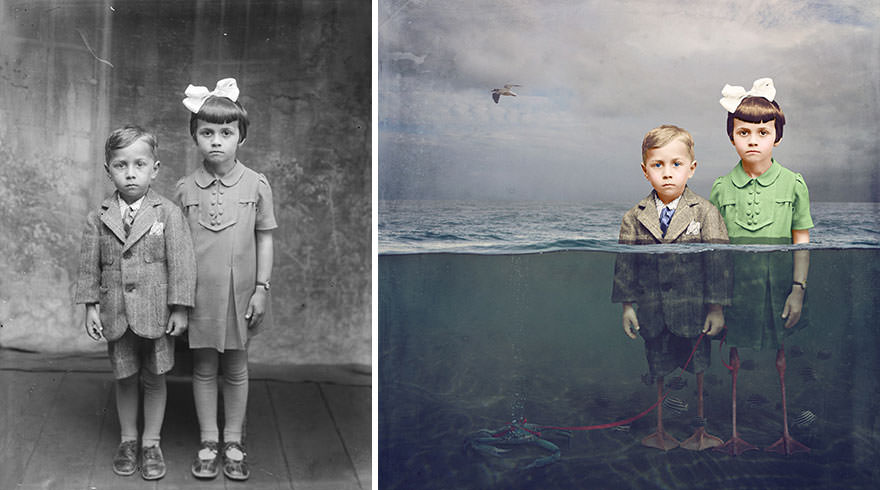
Two children stand in a formal studio pose on the left, their expressions steady and their outfits carefully chosen—jacket and tie for the boy, a neat dress and oversized bow for the girl. The original glass-plate look is all texture and tone: scuffed floorboards, a softly mottled backdrop, and that unmistakable stillness that comes from early photography’s long, quiet exposures. It’s the kind of portrait meant to last, preserving not just faces but a family’s sense of dignity and presentation.
Then the recolorist’s conceptual leap transforms the scene into something dreamlike and symbolic, shifting the pair from a plain studio into an open seascape with a cool horizon and a faint bird overhead. Color becomes storytelling here: the girl’s green dress and the children’s pale skin tones feel deliberate against the gray-blue water and sky, while the waterline slicing across their torsos turns a simple portrait into an allegory of depth, memory, and what lies beneath the surface. The edit doesn’t simply “restore” the past—it reimagines it, blending historical photo colorization with surreal, artistic photo manipulation.
For readers searching for recolored historical photos, glass-plate photography, or imaginative photo restoration, this post highlights how modern artists can honor archival imagery while also interrogating it. The side-by-side comparison invites you to notice what’s documentary—the clothing details, posture, and studio conventions—and what’s interpretive—the ocean setting and submerged elements that shift the emotional register. In that tension between record and reinvention, the portrait gains a second life, turning quiet childhood formality into a vivid, contemporary meditation on time.