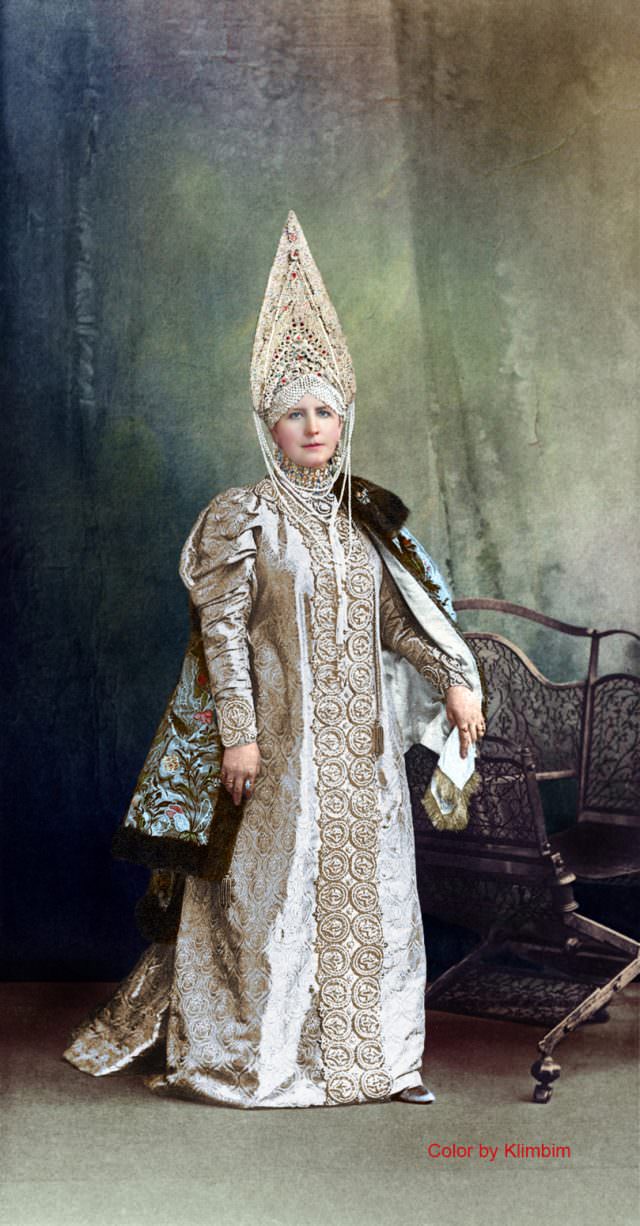
Regal formality radiates from the portrait of Countess Keller, née Princess Schakhovskoy, presented in the guise of a “Boyar’s Wife.” Her towering kokoshnik-like headdress, heavy with embroidery and jewel-like accents, immediately signals a deliberate nod to old Russian court traditions, while her steady gaze anchors the theatrical grandeur in something quietly personal. The studio backdrop is plain and painterly, allowing the ornate costume—more ceremonial than everyday—to command the viewer’s attention.
Silvery brocade patterns cascade down the length of her gown, and a richly decorated mantle with floral motifs and dark fur trim drapes from her shoulders, suggesting both rank and ritual. One hand rests near a small accessory, the other relaxed at her side, as if the sitter is balancing aristocratic poise with the requirements of posed photography. A carved bench at the edge of the frame, partly in shadow, hints at the staged environment typical of period portrait studios, where furniture served as both prop and compositional anchor.
Colorization transforms the scene from distant record to tactile presence, bringing out the cool sheen of the fabric, the warmth of skin tones, and the subdued greens of the background. For readers interested in Russian aristocracy, historical costume, and the revival of pre-modern dress in formal portraiture, this image offers a vivid doorway into how identity and heritage could be performed through clothing. The title’s layered naming—countess, princess by birth, and “boyar’s wife” by costume—captures the social storytelling that a single portrait could carry.